


What's Happening?
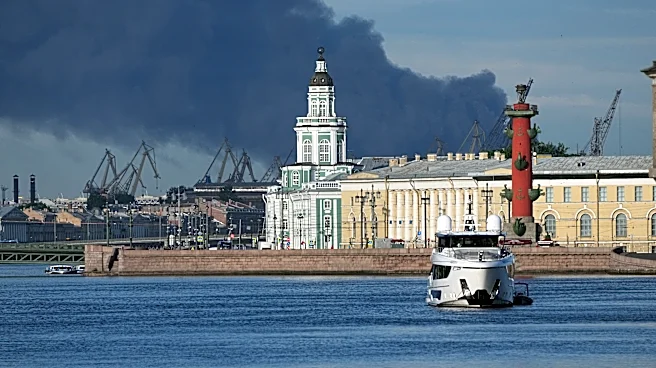
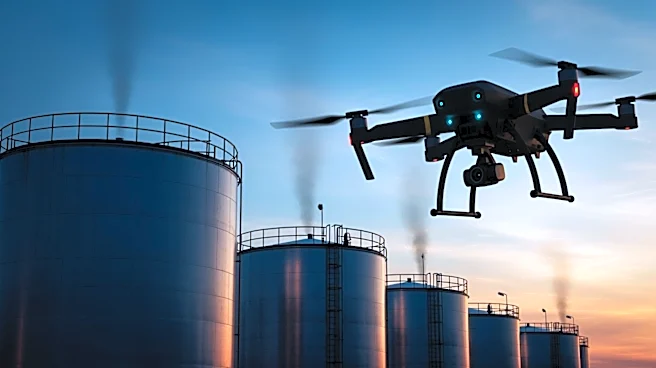
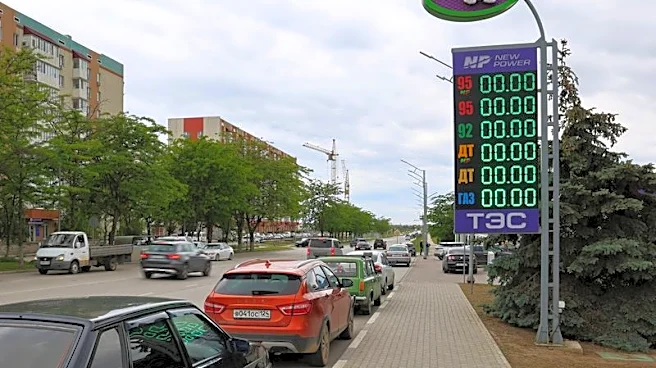
Russia is experiencing a severe gasoline shortage, with rationing implemented in several regions including St. Petersburg, Belgorod, Kursk, and occupied Luhansk. This crisis follows Ukrainian drone strikes that have knocked out approximately 40% of Russia's
refining capacity. The strikes have led to significant disruptions in fuel supply, with rationing measures such as caps on gasoline purchases being enforced. The situation is particularly dire in Crimea, where long queues and a shadow market for fuel have emerged. The crisis is compounded by Russia's ongoing export bans and increased reliance on imports from Belarus.
Why It's Important?
The gasoline crisis highlights the vulnerability of Russia's energy infrastructure to targeted attacks, which can have widespread economic and social impacts. The disruption of fuel supplies affects not only civilian life but also military logistics, potentially hindering Russia's operational capabilities. The crisis also places additional strain on Russia's economy, which is already facing budgetary pressures due to reduced military spending and falling export revenues. The situation underscores the strategic importance of energy security and the potential for targeted strikes to influence broader geopolitical dynamics.
What's Next?
If the gasoline shortage persists, it could lead to increased public dissatisfaction and pressure on the Russian government to address the crisis. Russia may need to explore alternative supply routes and enhance its refinery security to mitigate future disruptions. The ongoing situation could also prompt further international scrutiny and potential diplomatic interventions. As the crisis unfolds, the effectiveness of Russia's response will be critical in determining its impact on both domestic stability and its military operations.