
What's Happening?
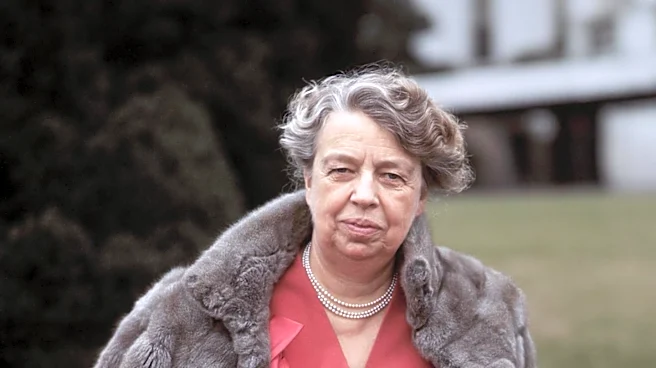
In 1933, First Lady Eleanor Roosevelt embarked on several unannounced road trips through Vermont and other New England states, and into Quebec, driving herself and rejecting extensive Secret Service protection. Her initial visit to Vermont on June 23,
1933, involved traveling from Massena, New York, to the Maine coast with friends Marion Dickerman and Nancy Cook. During this trip, she was spotted having lunch in Richmond and purchasing maple products in St. Johnsbury. Later, in July 1933, she returned for a three-week road trip with Lorena Hickok, a prominent reporter who later joined the Federal Emergency Relief Administration. Despite Secret Service concerns following an assassination attempt on President-elect Franklin D. Roosevelt earlier that year, the First Lady insisted on minimal security, carrying only a revolver provided by the Secret Service, which she kept unloaded in her glove compartment. Her desire was to escape the scrutiny of her role and enjoy a relaxing trip, often going unrecognized by the public until local newspapers reported her sightings.
Why It's Important?
Eleanor Roosevelt's independent road trips in 1933 were significant as they challenged the traditional, largely ceremonial role of the First Lady. By actively engaging with ordinary Americans and observing their lives firsthand, she began to redefine the position, transforming it into one with a more active and policy-shaping influence. Her travels, particularly through states like Vermont which had strongly opposed her husband's election, provided her with direct insights into the challenges faced by rural communities during the Great Depression. This direct engagement allowed her to serve as the President's 'eyes and ears,' bringing back valuable information and perspectives that informed the administration's policies, especially those related to the New Deal. This approach laid the groundwork for future First Ladies to take on more substantive roles beyond social hosting, impacting public policy and societal engagement.
What's Next?
Following these initial independent travels, Eleanor Roosevelt continued to expand the scope of the First Lady's role throughout President Franklin D. Roosevelt's 12 years in office. Her experiences on these road trips solidified her commitment to understanding and addressing the needs of various American communities. She began writing a newspaper column and traveled extensively, often covering 40,000 miles or more annually, to represent the administration and gather information. This active engagement set a precedent for future First Ladies to be more involved in policy advocacy and public outreach. Her refusal of constant Secret Service protection, while a point of contention at the time, underscored her fiercely independent nature and her desire for direct, unfiltered interaction with the American public, which would become a hallmark of her public service.
Beyond the Headlines
The deeper implications of Eleanor Roosevelt's 1933 road trips extend to the evolution of the First Lady's public image and responsibilities. Her insistence on driving herself and minimizing security reflected a desire for authenticity and a rejection of the insulated life often associated with high office. This approach allowed her to connect with Americans on a personal level, fostering a sense of accessibility and empathy that was crucial during the economic hardships of the Great Depression. Furthermore, her relationship with Lorena Hickok, now widely understood by scholars as romantic, adds a layer of complexity to her personal life and public persona, highlighting her independence and willingness to defy societal norms of the era. Her decision to learn how to use a revolver, despite her reluctance, also speaks to the unique security challenges and personal compromises she faced while maintaining her autonomy.