







What's Happening?
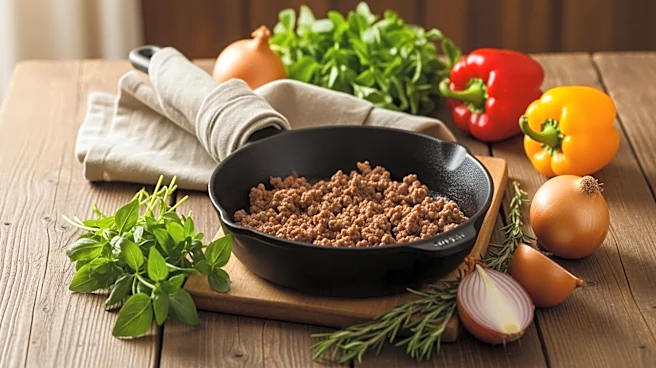
With the cost of meat on the rise, consumers are seeking ways to make ground beef last longer in their meals. According to NPR, the average price of a pound of ground beef has increased to nearly $7, up from $4.10 five years ago. Dan Pashman, host of The
Sporkful podcast, discusses various methods to extend the use of ground beef. Traditional dishes like meatloaf and meatballs are highlighted as effective ways to stretch meat by incorporating ingredients such as breadcrumbs. Additionally, Pashman suggests using mushrooms to bulk up dishes like spaghetti or tacos, effectively doubling the amount of food produced from a single pound of ground beef. Mixing ground beef with other meats like pork or turkey is another strategy, although it requires careful cooking to ensure safety. Restaurants are also adapting by either adjusting portion sizes or increasing prices to manage the higher costs.
Why It's Important?
The rising cost of meat is a significant concern for both consumers and the food industry. For households, finding ways to stretch ground beef can help manage grocery budgets amid inflation. This is particularly important for families who rely on meat as a staple in their diets. For the restaurant industry, the challenge lies in balancing cost management with customer satisfaction. As prices increase, restaurants must decide whether to pass these costs onto consumers or find creative ways to maintain portion sizes without compromising quality. This situation underscores broader economic pressures affecting food prices and consumer spending habits.
What's Next?
As meat prices continue to rise, consumers and businesses may increasingly turn to alternative proteins and meat substitutes. This could lead to a shift in dietary habits and a greater emphasis on plant-based options. Additionally, the food industry might innovate further in developing cost-effective recipes and products that cater to budget-conscious consumers. Monitoring these trends will be crucial for understanding the evolving landscape of food consumption and pricing.