



What's Happening?
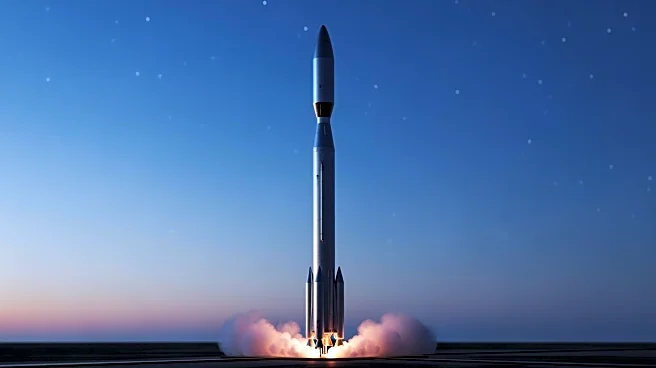
India's Polar Satellite Launch Vehicle (PSLV) encountered an anomaly during its second launch attempt, carrying the EOS-N1 military satellite and 15 other payloads. The launch from the Satish Dhawan Space Centre experienced disturbances in vehicle roll
rates and deviations in the flight path during the third stage engine burn. This follows a previous failure in May 2025, marking the fourth failure in 64 missions for the PSLV. Despite recent challenges, the PSLV has a history of successful launches, including high-profile missions like the Chandrayaan-1 lunar probe and the Mars Orbiter Mission.
Why It's Important?
The PSLV's recent failures highlight the challenges faced by space agencies in maintaining reliable launch vehicles. The success of such missions is crucial for India's space ambitions, including military and scientific objectives. The EOS-N1 satellite, designed for hyperspectral imaging, was intended to enhance India's military surveillance capabilities. The outcome of this mission could impact future satellite deployments and India's position in the global space industry. The Indian Space Research Organisation (ISRO) will need to address these technical issues to ensure the reliability of its launch vehicles.
What's Next?
ISRO will conduct a thorough analysis of the launch data to identify the cause of the anomaly and implement corrective measures. The agency will focus on ensuring the reliability of the PSLV for future missions, which are critical for India's space exploration and defense capabilities. The investigation's findings will inform improvements in launch vehicle design and operational procedures. ISRO's ability to address these challenges will be key to maintaining its reputation and achieving its ambitious space goals.