







What's Happening?
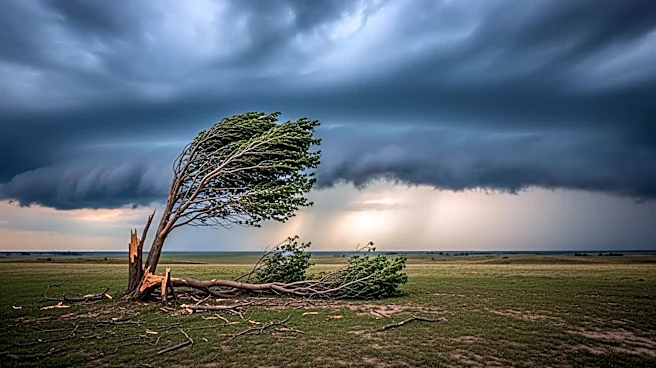
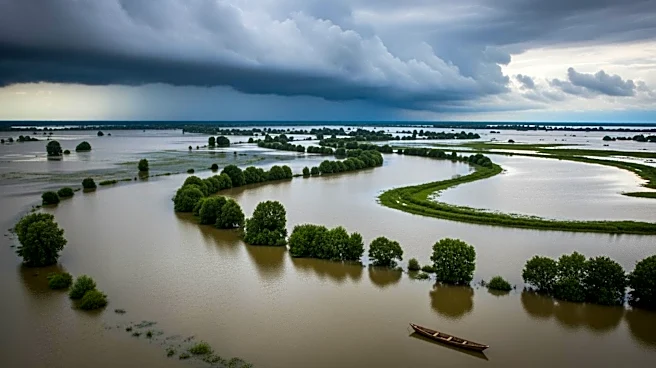
Governor Mike Braun has declared a state of disaster emergency for 63 counties in Indiana due to severe weather conditions, including flooding, tornadoes, and a derecho, that occurred between June 6 and June 18. The declaration covers counties such as Lake,
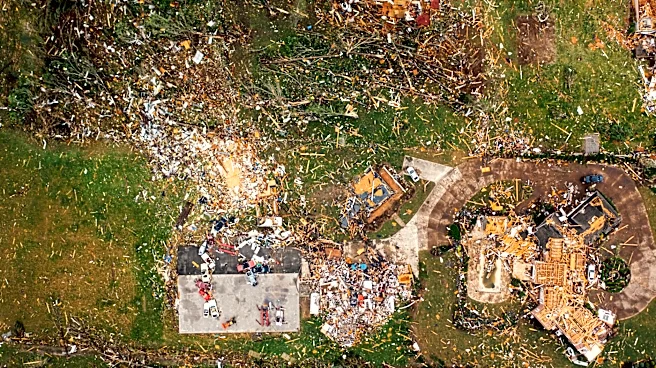
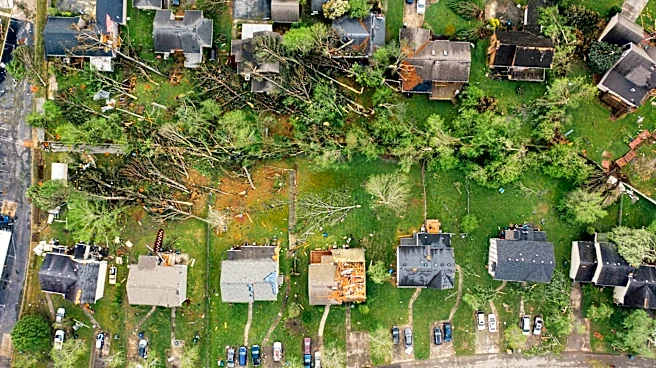
Porter, LaPorte, Marion, Tippecanoe, Jasper, and St. Joseph. This emergency status allows the Indiana Department of Homeland Security to provide financial assistance to affected families through the State Disaster Relief Fund. The Lake County Board of Commissioners had already declared a local disaster emergency, which aligns with state and federal guidelines, making the county eligible for potential funding. The severe weather included five tornadoes, with an EF3 tornado causing significant damage in the Kouts area. Residents are encouraged to report storm damage to Indiana 211, and agricultural damage should be reported to the Purdue Extension.
Why It's Important?
The declaration of a state of emergency is crucial as it mobilizes state resources to support recovery efforts and address urgent needs in the affected communities. This action underscores the severity of the weather events and the potential for significant economic and infrastructural impacts. The financial assistance provided through the State Disaster Relief Fund can help families and businesses recover from the damage. Additionally, the declaration facilitates the collection of damage assessment data, which is essential for determining eligibility for further government assistance. The response to this disaster highlights the importance of preparedness and the role of government in disaster management.
What's Next?
In the coming weeks, damage assessment teams will be deployed to evaluate the extent of the destruction and determine if the thresholds for additional government assistance are met. The state will continue to coordinate with local agencies to ensure that resources are distributed effectively. Residents and businesses will need to navigate the recovery process, potentially seeking state and federal aid. The situation may prompt discussions on improving infrastructure resilience and emergency response strategies to better handle future severe weather events.