


What's Happening?
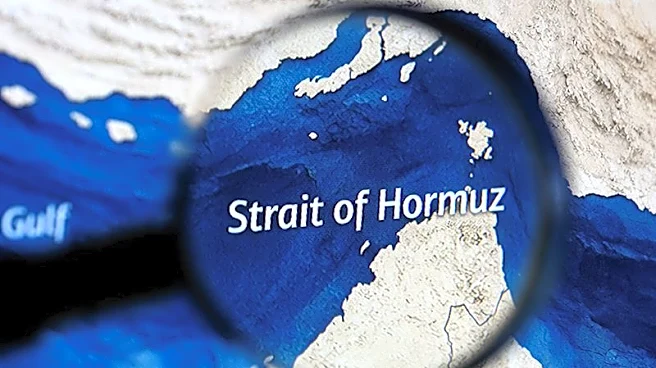
German Chancellor Friedrich Merz announced that Germany is prepared to contribute to a mission aimed at ensuring freedom of navigation through the Strait of Hormuz. This mission is seen as crucial for maintaining international maritime security in a region
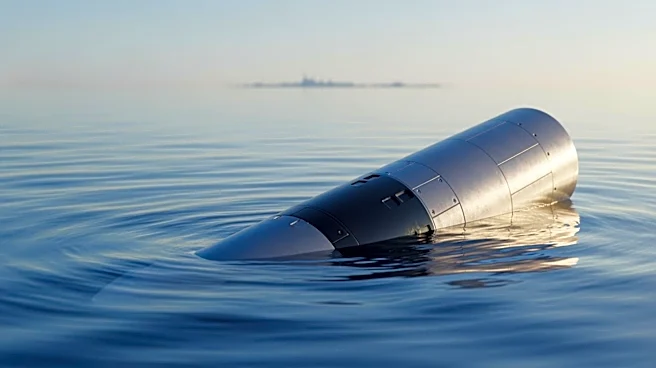
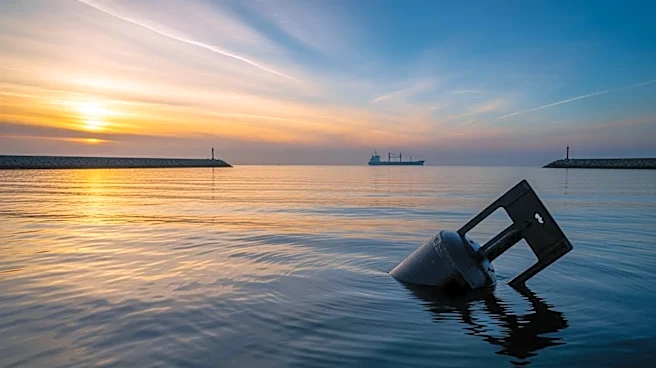
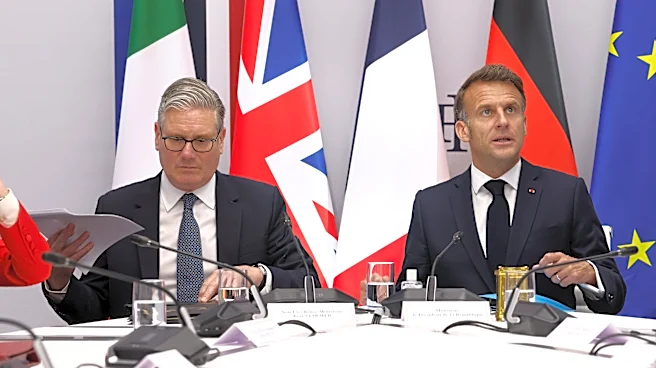
that is vital for global oil transportation. Merz emphasized the importance of U.S. involvement, stating that input from the United States would be 'desirable.' The initiative requires a decision from the German federal government, a mandate from the Bundestag, and a comprehensive military strategy. The mission could potentially include reconnaissance and mine clearance operations. Merz's statement was made during a meeting in Paris with leaders from France, Britain, and Italy, highlighting a collaborative European approach to the issue.
Why It's Important?
The Strait of Hormuz is a strategic chokepoint through which a significant portion of the world's oil supply is transported. Ensuring its security is critical for global energy markets and economic stability. Germany's willingness to contribute to a mission in the region underscores the importance of international cooperation in maintaining maritime security. The call for U.S. involvement reflects the strategic role the United States plays in global security matters, particularly in the Middle East. Successful collaboration could enhance diplomatic relations between Europe and the U.S., while failure to secure the strait could lead to disruptions in oil supply and increased geopolitical tensions.
What's Next?
The next steps involve securing approval from the German federal government and the Bundestag to proceed with the mission. A detailed military plan will need to be developed, potentially involving reconnaissance and mine clearance. Discussions with the United States and other international partners will be crucial to formulating a coordinated response. The outcome of these discussions could influence the level of U.S. involvement and the overall effectiveness of the mission. The situation will likely be closely monitored by global markets and political analysts, given its potential impact on international trade and security.