







What's Happening?
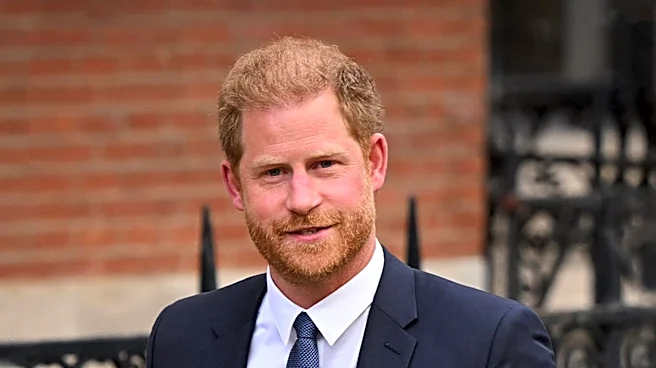
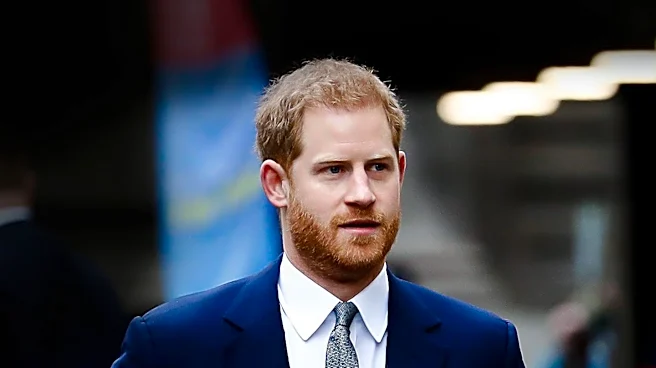
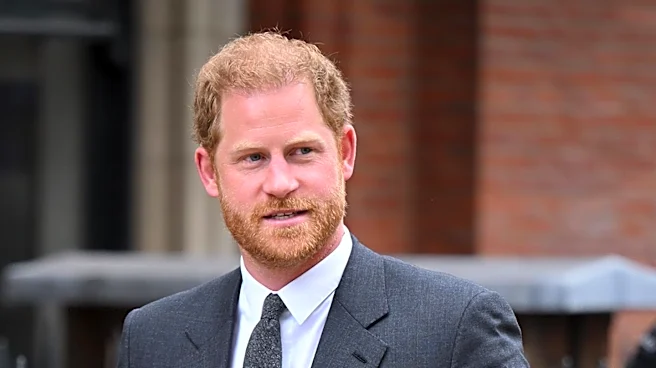
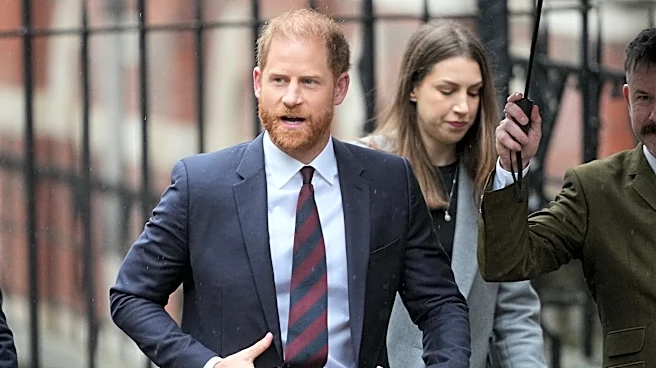
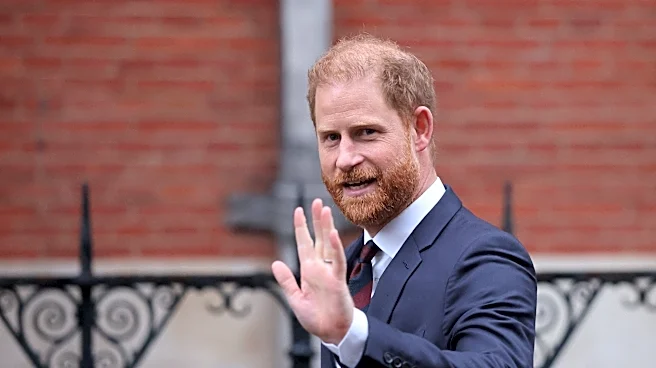
Prince Harry's legal battle against the publisher of the Daily Mail has concluded with a judge dismissing his privacy invasion claims. Justice Matthew Nicklin ruled that Prince Harry failed to provide sufficient evidence to support his allegations that Associated
Newspapers Ltd. engaged in unlawful activities. The judge noted that the information in question could have been sourced legitimately, rejecting the broad inferences Harry relied upon. This lawsuit was part of Harry's broader campaign against British tabloids, which he blames for contributing to the death of his mother, Princess Diana, and for the negative media attention towards his wife, Meghan Markle. The case, which included other high-profile claimants like Elton John and Elizabeth Hurley, sought substantial damages but ended in defeat, potentially leaving the claimants with significant legal costs.
Why It's Important?
The dismissal of Prince Harry's lawsuit marks a significant moment in his ongoing efforts to challenge the British tabloid press. This case was the last of his legal actions aimed at curbing what he perceives as invasive and unethical media practices. The outcome is a setback for Harry and others who have sought to hold the press accountable for privacy violations. The ruling also serves as a vindication for Associated Newspapers Ltd., reinforcing the legitimacy of their journalistic practices. This decision could influence future legal actions against media outlets, potentially discouraging similar lawsuits due to the high costs and the difficulty of proving unlawful information gathering.
What's Next?
Following the dismissal, it is unclear whether Prince Harry will pursue further legal action or appeal the decision. The ruling may prompt him to reassess his strategy in dealing with the media. For Associated Newspapers Ltd., the victory strengthens their position against similar claims and may embolden other media organizations facing privacy lawsuits. The broader implications for media regulation and privacy rights remain to be seen, as this case highlights the challenges individuals face in proving unlawful media practices.