





What's Happening?
The U.S. Department of Homeland Security (DHS) has proposed a new rule that would introduce a filing fee of USD 103,265 for all H-1B cap-subject petitions, including those filed under the advanced degree (master’s cap) exemption. This proposed fee would be
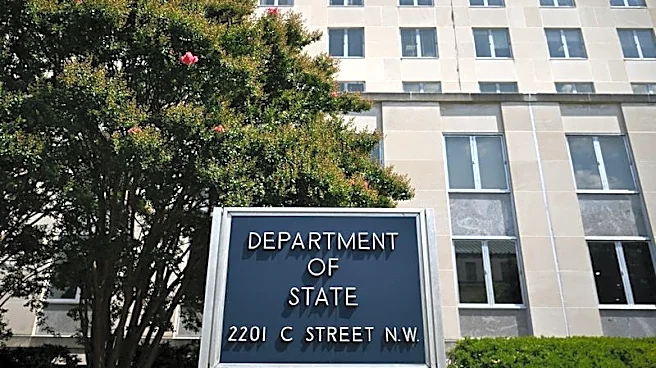
payable at the time of filing and would be in addition to all existing H-1B petition fees. According to DHS, the fee is intended to help recover a portion of the federal government’s costs associated with administering the lawful immigration system. These costs include activities carried out by DHS, the Department of Justice (DOJ), Department of State (DOS), and Department of Labor (DOL). The proposal specifically applies only to H-1B petitions subject to the annual cap and would not affect cap-exempt filings. DHS has indicated that this fee would serve as a dedicated revenue mechanism to support immigration-related operations across multiple federal agencies. The proposed rule was scheduled for publication in the Federal Register on August 25, 2026, initiating a 30-day public comment period. After this period, DHS will review stakeholder feedback before deciding whether to proceed with a final rule.
Why It's Important?
This proposed fee increase for H-1B cap-subject petitions could significantly impact U.S. businesses that rely on highly skilled foreign workers, particularly in technology and other specialized sectors. The substantial additional cost of over $100,000 per petition could deter smaller companies or startups from sponsoring H-1B visas, potentially limiting their access to global talent. Larger corporations might absorb the cost, but it could still influence their hiring strategies and operational budgets. For foreign professionals seeking to work in the U.S., this fee adds another barrier, making the H-1B visa program more expensive and potentially less accessible. The move reflects a broader effort by the U.S. government to shift more of the financial burden of immigration system administration onto applicants and employers. This could lead to a decrease in the number of H-1B applications, impacting the flow of skilled labor into the U.S. economy and potentially affecting innovation and competitiveness in key industries. The public comment period is crucial for stakeholders to voice concerns and provide feedback on the potential economic and operational consequences of such a significant fee hike.
What's Next?
Following the scheduled publication of the proposed rule in the Federal Register on August 25, 2026, a 30-day public comment period will commence. During this time, businesses, immigration attorneys, advocacy groups, and individuals will have the opportunity to submit their feedback and concerns regarding the proposed USD 103,265 fee for H-1B cap-subject petitions. After the comment period closes, DHS will review all submitted feedback. This review process will be critical in determining whether the agency proceeds with the proposed rule as is, modifies it based on public input, or decides against implementing the fee. The final decision will have direct implications for companies planning to hire H-1B workers in future cap seasons and for foreign professionals aspiring to work in the U.S. Stakeholders will be closely monitoring DHS's response to the public comments and its subsequent decision, which could significantly alter the landscape of the H-1B visa program.
Beyond the Headlines
The proposed H-1B fee increase extends beyond mere financial implications, touching upon broader ethical and economic considerations for the U.S. The substantial cost could be seen as a de facto restriction on immigration, potentially favoring larger, more established companies over smaller businesses and startups that often drive innovation. This could lead to a less diverse and dynamic workforce, as the ability to pay such a high fee becomes a significant determinant in talent acquisition. Ethically, it raises questions about access to opportunity and whether the U.S. is inadvertently creating a two-tiered system where only the wealthiest employers can access global talent. Long-term, this policy could influence the U.S.'s standing as a global leader in technology and research if it becomes too costly or difficult for international talent to contribute. It also highlights the ongoing debate about who should bear the cost of maintaining the immigration system—taxpayers, employers, or applicants—and the potential for such fees to become a revenue-generating mechanism rather than solely a cost-recovery tool.