



What's Happening?
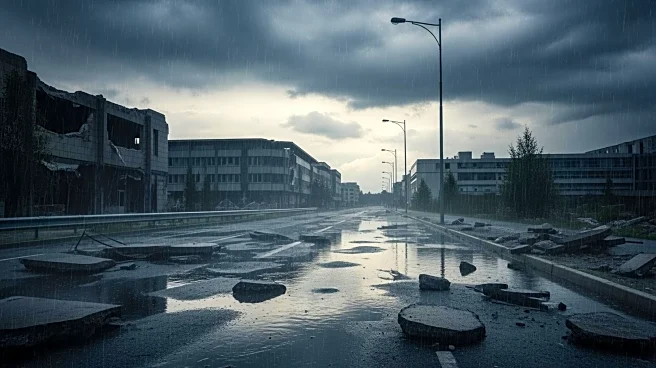
Palestinians in Gaza are grappling with the aftermath of severe torrential rains that have caused significant destruction across the region. Over the past week, more than 9 inches of rain have fallen, leading to the collapse of buildings already weakened
by a two-year conflict. The flooding has resulted in at least 12 deaths, including a two-week-old baby who succumbed to hypothermia. The majority of Gaza's 2 million residents, many of whom live in makeshift tent camps, have been displaced. The infrastructure in these camps is inadequate, with poor drainage and sanitation facilities exacerbating the crisis. Despite a ceasefire agreement that was supposed to facilitate the entry of aid, the flow of essential supplies has been insufficient, leaving many without proper shelter or winter necessities.
Why It's Important?
The situation in Gaza highlights the ongoing humanitarian challenges faced by its residents, exacerbated by natural disasters and political complexities. The inadequate response to the crisis underscores the difficulties in delivering aid to conflict zones, where infrastructure is already compromised. The lack of sufficient shelter and winter supplies poses a severe risk to the health and safety of the displaced population, particularly as winter conditions worsen. This crisis also reflects broader geopolitical tensions, as aid delivery is often entangled with political negotiations and security concerns. The humanitarian needs in Gaza are urgent, and the international community's response will be critical in preventing further loss of life and alleviating suffering.
What's Next?
Efforts to address the humanitarian needs in Gaza are likely to continue, with international aid organizations and governments potentially increasing pressure on relevant authorities to facilitate the entry of necessary supplies. The ongoing ceasefire provides a window of opportunity for increased aid delivery, but political and logistical challenges remain. Monitoring and advocacy by humanitarian groups will be crucial in ensuring that commitments to aid delivery are met. Additionally, there may be calls for more robust infrastructure development to prevent future disasters from having such devastating impacts.