
What's Happening?
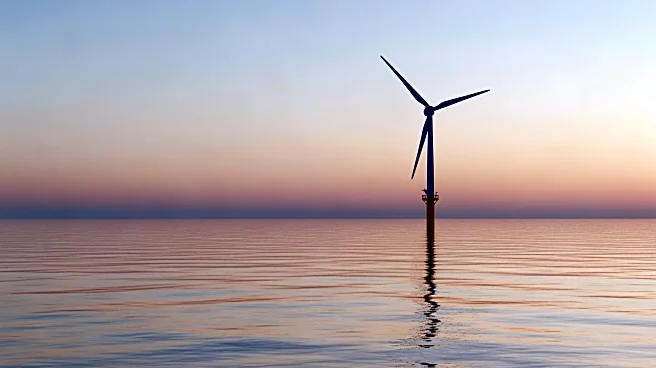
Germany has decided to scale back the capacity it will auction in its upcoming 2026 offshore wind tender. This decision follows a recent auction in August that failed to attract any bids, raising concerns
within the local offshore wind sector. The German Parliament has approved legislation to reduce the auction capacity to between 2.5 and 5 gigawatts (GW), down from the previously planned 6 GW, and significantly less than the 10 GW offered in the August auction. The lack of bids in the August auction, which did not include government subsidies, has prompted calls for a fundamental redesign of Germany's renewable energy auctions. The Federal Network Agency's auction for 10.1 GW of offshore wind farms in the North Sea ended without any investor interest, highlighting the challenges faced by developers in a difficult market environment characterized by rising costs and supply chain issues.
Why It's Important?
The failure of the August auction and the subsequent reduction in auction capacity underscore significant challenges in Germany's renewable energy sector, particularly in offshore wind development. This situation highlights the risks associated with zero-subsidy projects amid economic pressures such as rising costs and supply chain constraints. The decision to reduce auction capacity could impact Germany's ability to meet its ambitious renewable energy targets, which include boosting offshore wind capacity to 70 GW by 2045. The lack of investor interest suggests a need for policy adjustments to provide more revenue and planning security, which are crucial for attracting investment and ensuring the growth of the offshore wind sector. This development could influence energy policy and investment strategies in Germany and potentially affect the broader European renewable energy market.
What's Next?
In response to the auction failure, Germany's ruling coalition has proposed measures to speed up permitting and approvals for offshore wind projects and power grid upgrades. These measures aim to address the challenges faced by the sector and encourage investment. The government and industry stakeholders may need to collaborate on revising tender processes to make them more attractive to investors. This could involve reintroducing subsidies or other financial incentives to mitigate risks for developers. The outcome of these efforts will be critical in determining whether Germany can achieve its long-term renewable energy goals and maintain its leadership in the global transition to sustainable energy sources.