
What's Happening?
The Trump administration has launched military strikes in Syria targeting Islamic State (ISIS) fighters and infrastructure. This action comes in response to an ambush that resulted in the deaths of two
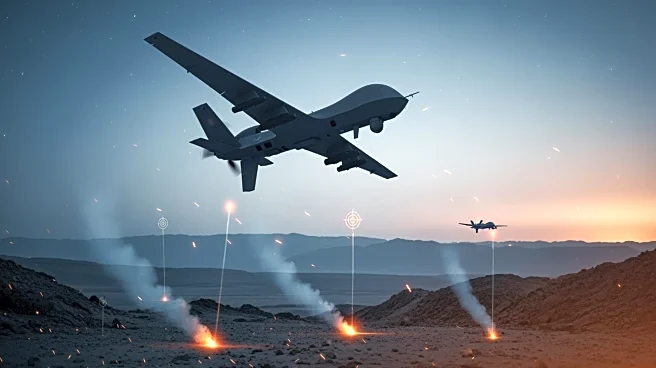
U.S. troops and an American civilian interpreter. The strikes, described as 'large-scale,' targeted 70 sites across central Syria, including weapons storage and operational headquarters used by ISIS. The operation involved F-15 Eagle jets, A-10 Thunderbolt aircraft, and AH-64 Apache helicopters, among other military assets. President Trump emphasized the strikes as a form of retaliation and a message of deterrence against future attacks on American personnel. The Syrian government, under President Ahmad al-Sharaa, has expressed support for the U.S. efforts, highlighting the need for international cooperation against terrorism.
Why It's Important?
This military action underscores the ongoing threat posed by ISIS despite previous territorial losses. The strikes aim to dismantle ISIS's operational capabilities in Syria, thereby reducing the group's ability to regroup and launch further attacks. For the U.S., this operation is a demonstration of its commitment to protecting its forces and maintaining pressure on terrorist groups in the region. The collaboration with the Syrian government marks a significant shift in U.S.-Syria relations, potentially opening avenues for further cooperation in counter-terrorism efforts. The operation also reflects the broader U.S. strategy of maintaining a military presence in the Middle East to counteract extremist threats.
What's Next?
Further military actions may be anticipated as the U.S. continues to target ISIS infrastructure in Syria. The Trump administration has indicated that additional strikes could occur if ISIS attempts further attacks on American forces. The evolving U.S.-Syria relationship could lead to more coordinated efforts against ISIS, although the long-term implications of this partnership remain uncertain. The international community may also respond, potentially increasing diplomatic and military support for anti-ISIS operations in the region.
Beyond the Headlines
The strikes highlight the complex geopolitical dynamics in Syria, where multiple actors, including the U.S., Russia, and regional powers, have vested interests. The U.S. military presence and actions in Syria could influence broader regional stability and impact U.S. relations with other Middle Eastern countries. Additionally, the operation raises questions about the future of U.S. military involvement in the region, especially as the administration balances its focus between Middle Eastern and Western Hemisphere priorities.