






What's Happening?
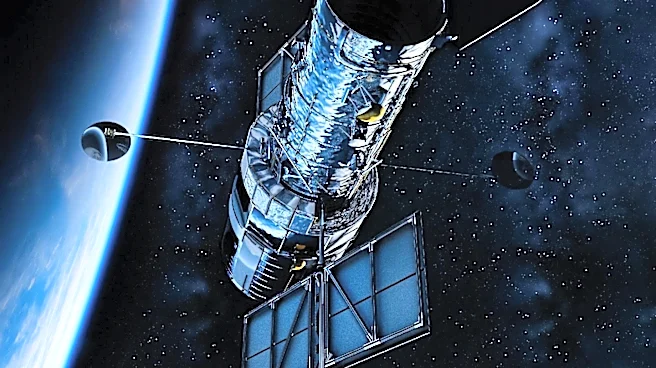
NASA's Neil Gehrels Swift Observatory has officially ended its science operations after more than 21 years of studying gamma-ray bursts and other high-energy cosmic events. The spacecraft is now expected to re-enter Earth's atmosphere within the coming
weeks, as announced by NASA on October 23. Originally designed for a two-year mission, Swift significantly surpassed its planned operational lifespan, contributing to the detection of over 2,000 gamma-ray bursts and supporting thousands of scientific publications. The mission's conclusion was prompted by increased solar activity, which led to greater atmospheric drag on the satellite in its low Earth orbit. This drag caused Swift's orbit to decay rapidly, making it increasingly difficult for its telescopes to maintain stable pointing at astronomical targets. The observatory reached an altitude of 171 miles on October 20, subsequently entering safe mode when it could no longer counteract the drag. The operations team at Penn State then issued the command to end the mission. A prior attempt in August by NASA and contractor Katalyst Space to boost Swift into a higher orbit using a commercial servicing spacecraft, LINK, was abandoned due to an attitude-control problem with the LINK spacecraft.
Why It's Important?
The conclusion of the Swift Observatory's mission marks the end of an era for a highly valuable astronomical instrument. Swift's unique capability to rapidly respond to gamma-ray bursts, turning to a detected event in approximately one minute and alerting other telescopes, made it an indispensable early-warning system for the scientific community. While NASA indicates that other missions can cover some aspects of Swift's work, no single existing replacement possesses the same comprehensive combination of capabilities. This creates a gap in observational astronomy, particularly for time-sensitive transient events like gamma-ray bursts, which are crucial for understanding extreme cosmic phenomena. The loss of Swift highlights the challenges of maintaining long-duration space missions, especially as spacecraft age and environmental factors like solar activity impact their operational viability. The failed commercial servicing attempt also underscores the complexities and risks associated with in-orbit servicing, an emerging field critical for extending the life of valuable space assets.
What's Next?
NASA will continue to monitor the Swift Observatory's orbit closely as it approaches re-entry into Earth's atmosphere. The agency expects the spacecraft to break up during re-entry and will provide updates through the Swift mission blog. While no specific re-entry date has been given, it is anticipated to occur within the next few weeks. The scientific community will now rely on other existing missions to cover the observational gaps left by Swift, though without a direct replacement, some capabilities will be diminished. Researchers will also continue to analyze the vast dataset collected by Swift over its two decades of operation, which is expected to yield further scientific discoveries. The experience with Swift's end-of-life and the failed servicing attempt may also inform future mission planning and the development of more robust in-orbit servicing technologies.
Beyond the Headlines
The decommissioning of the Swift Observatory underscores the transient nature of space-based scientific instruments and the continuous cycle of innovation and obsolescence in space exploration. Its extended operational life, far beyond its initial design, exemplifies the dedication of engineering and scientific teams to maximize the utility of these complex machines. The reliance on commercial partners for potential life extension, as seen with the Katalyst Space attempt, points to a growing trend in NASA's strategy to leverage private sector capabilities for space operations. This shift could lead to more cost-effective and flexible solutions for maintaining and upgrading space assets in the future, though the challenges encountered with LINK highlight the need for rigorous testing and reliability in such partnerships. The eventual re-entry of Swift, while controlled, also serves as a reminder of the increasing issue of space debris and the importance of responsible end-of-life planning for satellites.