





What's Happening?
The current artificial intelligence (AI) revolution is a culmination of decades of technological advancements, primarily driven by the convergence of semiconductor hardware, deep-learning algorithms, and massive training datasets. Modern AI systems, including
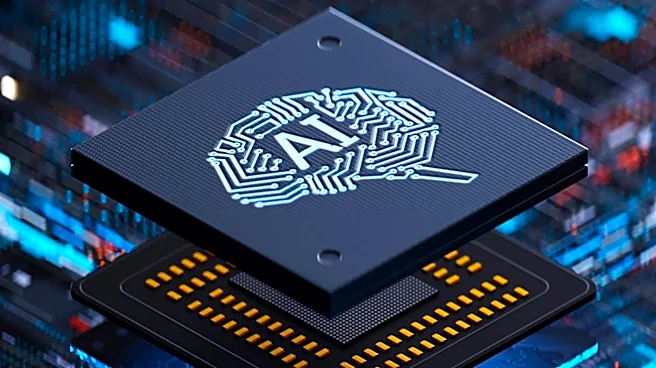
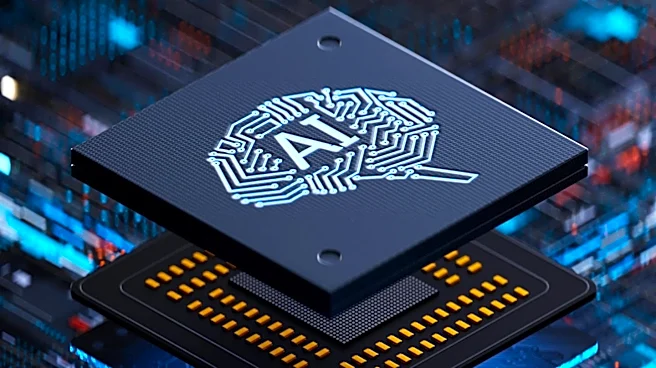
generative AI models, require immense computing capacity and processing speed, which are largely enabled by Graphics Processing Units (GPUs). Nvidia's GPUs, initially designed for computer graphics, proved highly suitable for the computational demands of AI, particularly after a 2012 breakthrough demonstrated their effectiveness in accelerating neural network training. Companies like Taiwan Semiconductor Manufacturing Company (TSMC) play a crucial role in manufacturing the advanced chips necessary for these powerful AI processors. The availability of vast datasets from the internet has also been instrumental, providing the material for AI models to learn patterns and relationships, leading to sophisticated responses and content generation.
Why It's Important?
This technological convergence has profound implications for the U.S. economy and global technology landscape. The demand for advanced semiconductor hardware fuels innovation and investment in the U.S. chip industry, impacting supply chains and national security. The widespread adoption of AI, particularly generative AI, is transforming various sectors, from healthcare and finance to entertainment and manufacturing, by automating tasks and enabling new capabilities. This shift creates new economic opportunities but also raises concerns about job displacement and the need for a skilled workforce capable of developing, deploying, and managing AI systems. The U.S. position as a leader in AI development is heavily reliant on continued advancements in these three core areas, making strategic investments in research, development, and manufacturing critical.
What's Next?
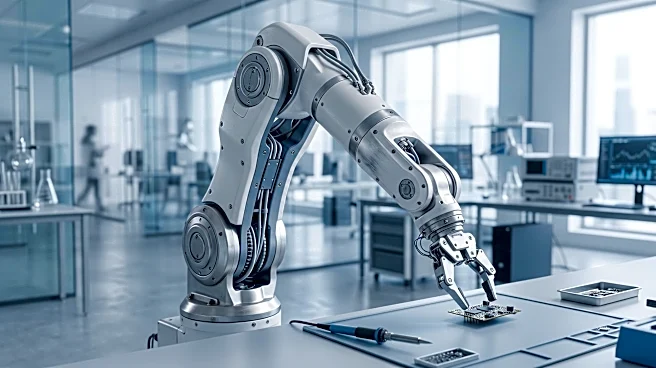
The future of AI will likely see continued advancements in hardware, algorithms, and data processing, leading to even more capable and autonomous systems. The focus is shifting towards 'agentic AI,' which involves AI systems designed to carry out tasks with varying degrees of autonomy, making decisions, and taking actions. This will expand AI's application into more complex, multi-step workflows across industries like healthcare and factory automation. As AI becomes more deeply integrated into society, there will be an increasing need for robust ethical frameworks, regulatory guidelines, and public discourse to address its societal impact, including potential benefits, limitations, and risks. Continued investment in semiconductor technology and AI research will be crucial for maintaining technological leadership and addressing the evolving challenges and opportunities presented by AI.
Beyond the Headlines
The AI revolution is not merely a technological phenomenon but also a societal one, prompting deeper questions about the nature of intelligence, human-machine interaction, and the future of work. The ability of AI to generate content resembling human-created work blurs lines between artificial and authentic, raising philosophical and practical challenges. The concentration of AI development and manufacturing capabilities in a few global players also has geopolitical implications, influencing international competitiveness and technological sovereignty. Understanding the historical trajectory of AI, from early experiments to today's sophisticated systems, provides crucial context for navigating its future. This includes recognizing that AI's capabilities are a result of sustained progress across multiple scientific and engineering disciplines, rather than sudden breakthroughs, underscoring the importance of long-term research and development.