


What's Happening?
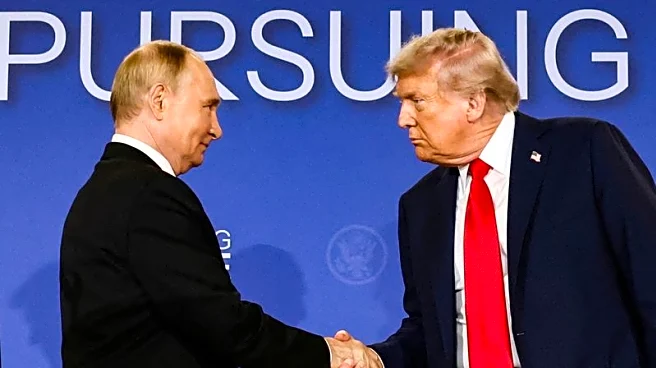
The Trump administration is engaged in trilateral peace talks with Russia and Ukraine, aiming to end the ongoing conflict that began with Russia's invasion of Ukraine four years ago. Special envoy Steve Witkoff and Jared Kushner, Trump's son-in-law, are leading
the U.S. delegation in discussions held in Abu Dhabi. The talks have resulted in agreements to release prisoners of war and open new communication channels, but significant challenges remain in achieving a comprehensive peace deal. President Trump has expressed optimism about the progress, despite acknowledging the complexities involved.
Why It's Important?
The peace talks are a critical test of Trump's foreign policy, particularly his ability to fulfill promises of resolving international conflicts. Success in brokering peace could enhance Trump's diplomatic credentials and influence global perceptions of U.S. leadership. However, the ongoing war has significant humanitarian and geopolitical implications, affecting regional stability and international relations. The outcome of these negotiations could impact U.S. alliances and its role in global conflict resolution.
What's Next?
The continuation of trilateral talks suggests ongoing diplomatic efforts to reach a resolution. The U.S. will need to navigate complex geopolitical dynamics, including Russia's strategic interests and Ukraine's sovereignty concerns. The international community will be closely monitoring the negotiations, with potential implications for U.S.-Russia relations and broader international security frameworks.