





What's Happening?
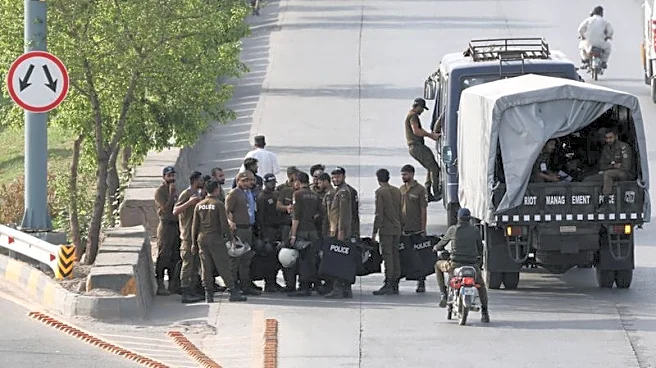
Iranian Foreign Minister Abbas Araghchi has communicated Tehran's negotiating demands and reservations regarding U.S. demands to Pakistani officials during a visit to Islamabad. This diplomatic engagement comes as Pakistan attempts to mediate between
the United States and Iran following weeks of conflict, a U.S.-announced ceasefire, and heightened tensions due to an American naval blockade of Iranian ports. President Trump indicated that Iran is preparing an offer to meet U.S. demands, while the U.S. maintains that the blockade will persist until an agreement is reached. The U.S. has called for Iran to relinquish its enriched uranium and ensure free oil transit through the Strait of Hormuz. Iran has criticized the blockade, labeling it an 'act of war' and a breach of the ceasefire.
Why It's Important?
The diplomatic efforts involving Pakistan as a mediator are significant in the context of U.S.-Iran relations, which have been strained by military confrontations and economic sanctions. The blockade of Iranian ports by the U.S. Navy is a critical point of contention, as it affects global oil supply routes through the Strait of Hormuz, a vital energy chokepoint. The outcome of these negotiations could impact global oil markets, regional stability, and international diplomatic relations. The U.S. demands for Iran to cease uranium enrichment and ensure oil transit are central to the broader geopolitical strategy in the Middle East, influencing both regional power dynamics and international economic interests.
What's Next?
The continuation of diplomatic talks mediated by Pakistan could lead to a de-escalation of tensions if a mutually agreeable solution is found. However, the U.S. has expanded its blockade efforts globally, requiring vessels traveling to or from Iranian ports to seek U.S. Navy approval. This move could further strain relations and complicate negotiations. Iran's military has warned of potential responses to what it perceives as 'blockade and piracy,' indicating that the situation remains volatile. The international community will be closely monitoring these developments, as any escalation could have far-reaching consequences for global security and economic stability.