
What's Happening?
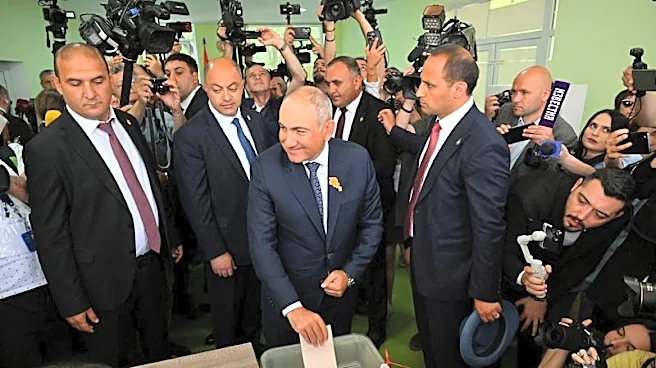
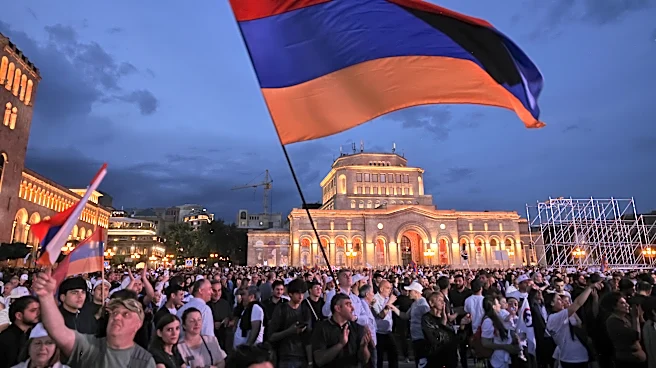
Armenia's ruling pro-Europe party, led by Prime Minister Nikol Pashinyan, has secured a victory in the parliamentary elections, marking a significant shift in the country's geopolitical alignment. The
Civil Contract party won a slim majority, reinforcing Armenia's pivot towards Europe and away from its traditional ally, Russia. This election result is expected to bolster Pashinyan's efforts to pursue peace agreements with neighboring Azerbaijan and Turkey, while maintaining Armenia's membership in the Russia-led Eurasian Economic Union. The election was closely watched by international observers, with accusations of Russian interference and economic pressure tactics aimed at influencing the outcome.
Why It's Important?
The election outcome signifies a potential realignment of Armenia's foreign policy, with implications for regional stability and international relations. By strengthening ties with Europe, Armenia may gain economic and political support, potentially reducing its reliance on Russia. This shift could alter the balance of power in the South Caucasus region, affecting Armenia's relations with its neighbors and major global powers. The election also highlights the challenges faced by countries in navigating geopolitical tensions and the influence of larger powers in their domestic affairs.
What's Next?
Following the election, Prime Minister Pashinyan is expected to focus on implementing his agenda of peace and regional cooperation. This includes pursuing diplomatic efforts to normalize relations with Azerbaijan and Turkey, which could lead to economic opportunities and improved security for Armenia. However, the government will need to navigate potential backlash from pro-Russian factions and manage the economic impact of Russian trade restrictions. The international community, particularly the European Union and the United States, may play a supportive role in Armenia's transition, offering diplomatic and economic assistance.