







What's Happening?
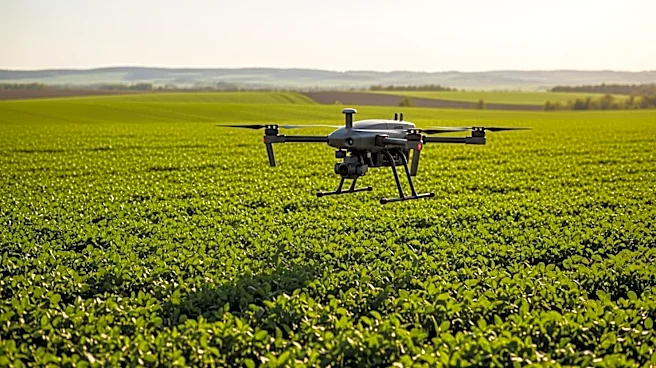
Drone technology is revolutionizing precision farming in India by enabling hyper-precise crop management. As of February 2026, India has registered over 38,500 drones and certified nearly 39,890 remote pilots, according to a government update. This development
is crucial for scaling precision farming, which traditionally relied on broad actions like spraying entire fields. Drones provide aerial images that help pinpoint areas of stress, such as declining crop vigor or emerging pest activity, allowing farmers to act based on visible patterns. This technology bridges the gap between satellite monitoring and ground inspection, offering real-time data that supports quicker corrective decisions during critical growth stages.
Why It's Important?
The integration of drone technology in agriculture is significant for enhancing food security and operational efficiency. By providing precise data, drones help reduce waste in inputs and improve crop health management, which is vital in a country with diverse farming conditions. This technology also supports objective crop loss assessments, especially after natural calamities, improving the accuracy and speed of insurance claims. The service model of drone usage, where local operators provide mapping and spraying services, reduces entry barriers for small farmers, making precision agriculture more accessible and affordable.
What's Next?
For drone-led farming to scale effectively, several factors need attention. Training and safety are paramount, as operators require proper training and permissions to fly drones safely near farms. Additionally, farm-level workflows must translate drone data into actionable plans for farmers. Building strong local networks of operators and ensuring reliable equipment maintenance are essential for sustaining the service model. As drone technology continues to evolve, it will further strengthen farmers' judgment by providing better visibility and enabling more precise actions.
Beyond the Headlines
The adoption of drone technology in agriculture also raises ethical and legal considerations, such as privacy concerns related to aerial surveillance and the need for regulatory frameworks to ensure safe and responsible usage. Moreover, the cultural shift towards technology-driven farming may require educational initiatives to help farmers adapt to new methods. Long-term, this technological integration could lead to shifts in agricultural practices, promoting sustainability and resilience against climate change.