








What's Happening?
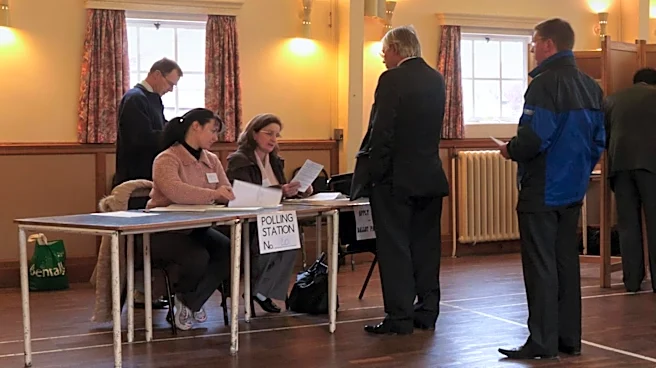
Jeff Kohler has been elected mayor of St. Thomas, Ontario, marking his return to the head of the city council after a 20-year absence. Kohler secured 7,407 votes, significantly outperforming runner-up Aidan Frederick, who received 2,641 votes. The election
also saw notable changes in the city council, with three incumbent members—Jim Herbert, Earl Taylor, and Joan Rymal—losing their seats. Former mayor Heather Jackson will return to the council, having campaigned on a platform of fiscal responsibility. Kohler expressed surprise at the composition of the new council but emphasized the need for teamwork to address the city's agenda. The new council is scheduled to be sworn in during the November 16 meeting. Voter turnout for the municipal election was 29.91%, a slight decrease from 30.6% in 2022.
Why It's Important?
The election of Jeff Kohler and the significant turnover in the St. Thomas city council signal a potential shift in the city's governance and priorities. Kohler's emphasis on teamwork and adherence to an existing financial plan suggests a focus on continuity and fiscal prudence, which could impact local taxpayers and the city's economic stability. The return of Heather Jackson, known for her focus on fiscal responsibility, further reinforces this direction. The departure of three incumbents and the arrival of new council members like Mike Brisson, Kyle Yates, and Joe Docherty Jr. could introduce fresh perspectives and potentially new policy debates. The low voter turnout, however, raises questions about citizen engagement and the representativeness of the electoral outcome, which could influence the council's mandate and public support for its decisions.
What's Next?
Mayor-elect Jeff Kohler plans to meet with the new council members to brief them and address any questions they may have, aiming for a smooth transition and a unified approach to governance. He has already engaged with the three new council members during the campaign, indicating a proactive stance on team building. Kohler anticipates that the majority of council members will adhere to the established financial plan, although he acknowledges that some new members might push for projects aligned with their campaign promises, potentially influencing the city's budget. The new council will be sworn in on November 16, after which they will begin addressing the city's agenda, including ongoing projects and financial planning. The city also has a public workshop scheduled for November 10 to discuss a Climate Adaptation Analysis and Plan.
Beyond the Headlines
The changes in St. Thomas's municipal leadership highlight the dynamic nature of local politics and the continuous evolution of community priorities. The emphasis on fiscal responsibility by both the mayor-elect and returning council members suggests a prevailing concern among the electorate regarding financial management and taxpayer impact. The low voter turnout, a recurring theme in many municipal elections, points to broader challenges in civic engagement and the need for strategies to encourage greater public participation in local governance. The mayor-elect's call for unity and collaboration among council members underscores the importance of effective teamwork in achieving municipal goals, especially when facing a diverse set of campaign promises and public expectations. The preservation of historical structures, such as the Emslie Field grandstand, also reflects a community's balance between modernization and heritage, often involving complex financial and community stakeholder considerations.