
What's Happening?
Israel, Greece, and Cyprus are in discussions to form a joint military force in the eastern Mediterranean. This proposed rapid response brigade would consist of approximately 2,500 troops, including land,
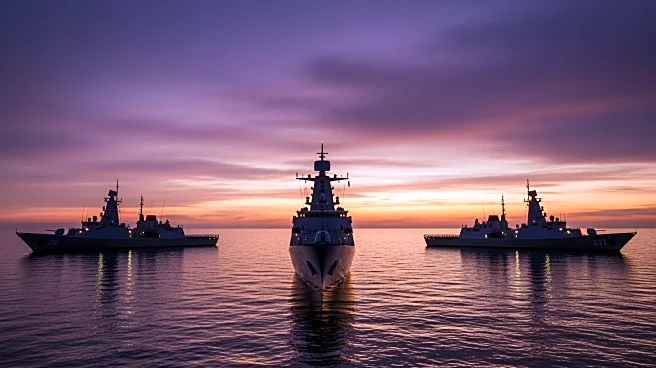
sea, and air units. The initiative aims to protect regional energy infrastructure and deter Turkey's military activities in the area. Each country would contribute troops and naval assets, with Israel and Greece each providing 1,000 soldiers and Cyprus contributing 500. The plan also includes air force squadrons and naval patrols. This development follows a diplomatic visit to Athens by Israeli officials, including acting National Security Adviser Gil Reich, to discuss regional security and postwar planning for Gaza. The joint force is seen as a strategic move to counter Turkey's influence and protect key energy sites, such as underwater pipelines.
Why It's Important?
The formation of a joint military force by Israel, Greece, and Cyprus highlights the growing regional security concerns in the eastern Mediterranean. This initiative could significantly impact the geopolitical dynamics, particularly in relation to Turkey's military presence. The collaboration aims to safeguard critical energy infrastructure, which is vital for the economic stability of the involved nations. Additionally, the move could strengthen the strategic ties between Israel, Greece, and Cyprus, potentially leading to enhanced defense and economic cooperation. The joint force serves as a deterrent against Turkey, which has been increasing its military activities in the region, thereby affecting the balance of power and security in the Mediterranean.
What's Next?
If the joint military force is established, it could lead to increased military cooperation and strategic alignment between Israel, Greece, and Cyprus. This may prompt Turkey to reassess its military strategy in the region. The initiative could also encourage other regional players to form similar alliances, potentially leading to a shift in the Mediterranean's security landscape. The involved countries may also seek to expand their cooperation beyond military aspects, exploring economic and energy partnerships. The success of this initiative could set a precedent for future regional collaborations aimed at addressing common security challenges.