


What's Happening?
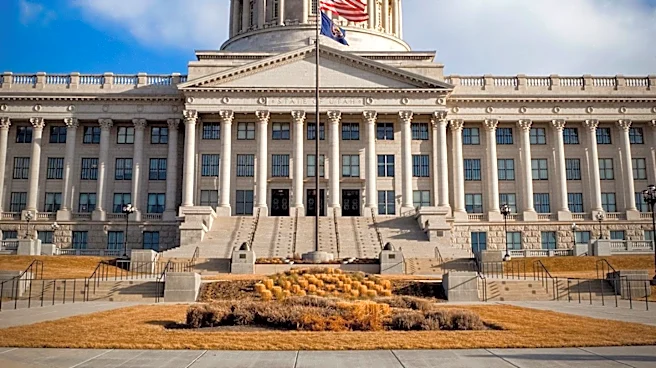
The Utah State Board of Education has created an Artificial Intelligence Student Task Force, intended to provide student input on AI discussions, potential policies, and student-led activities within public schools. This initiative stems from HB273, signed
by Governor Spencer Cox, which mandates the board to develop model policies for technology and AI in classrooms, including standards for appropriate use, privacy, security, and ethical interaction. As of a November 16 report, student members for this task force had not yet been appointed. The task force will operate under the existing Student Advisory Council and is expected to meet approximately four times per school year, alternating between in-person and virtual sessions. The goal is to gather diverse student perspectives on AI's role in education, acknowledging that student views on AI use vary, from utilizing it as a learning aid to concerns about its potential to circumvent genuine learning.
Why It's Important?
This development is significant for U.S. education as it represents a proactive step by a state to integrate student voices directly into the formation of AI policy. By involving students, Utah aims to create more relevant and effective guidelines for AI use in classrooms, addressing both the opportunities and challenges presented by the technology. The task force's input will directly influence the model policies required by HB273, potentially shaping how AI is taught and utilized across Utah's public school system. This approach could serve as a model for other states grappling with the rapid integration of AI into educational environments. The success of this initiative hinges on the board's ability to recruit a broad range of students, ensuring that the policies reflect diverse experiences and concerns, rather than just those of a select few.
What's Next?
The immediate next step for the Utah State Board of Education is to appoint student members to the Artificial Intelligence Student Task Force. Once established, the task force will begin its scheduled meetings, providing input that will directly inform the development of model policies for AI in public school classrooms, as mandated by HB273. Recruitment efforts will be crucial to ensure a wide representation of student perspectives from across Utah. The board's response to the students' recommendations and concerns will be a key indicator of the task force's effectiveness and the state's commitment to student-informed policy-making. Future activities might include hackathons or other collaborative events to engage more students and gather broader input on AI in education.
Beyond the Headlines
The establishment of this student AI task force highlights a growing recognition of the ethical and practical complexities surrounding AI in education. Beyond policy, it touches upon fundamental questions about learning, creativity, and digital citizenship. The differing views among students, such as using AI for practice problems versus concerns about it enabling students to avoid genuine struggle, underscore the need for nuanced approaches. This initiative could foster a generation of students who are not just users of AI, but active participants in shaping its responsible integration into society. It also raises questions about digital equity and access, ensuring that all students, regardless of their background, have a voice in these critical discussions and are prepared for an AI-driven future.