

What's Happening?
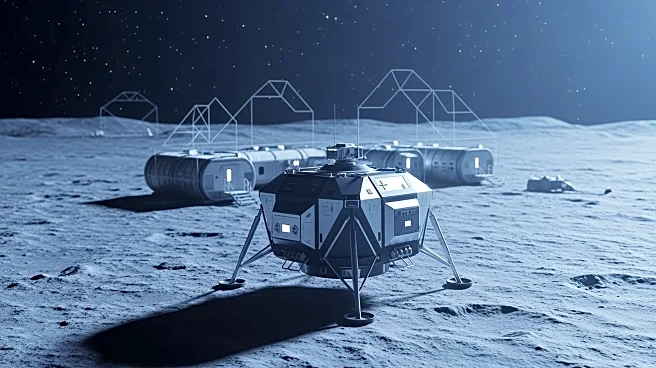
NASA has announced plans to launch the Artemis V mission by late 2028 using the Space Launch System (SLS) rocket. This mission is a significant step in NASA's Artemis program, which aims to establish a sustainable human presence on the Moon. Artemis V will
mark the beginning of the construction of a Moon base, with subsequent missions planned to occur approximately once per year. The Artemis program is part of NASA's broader goal to explore more of the lunar surface than ever before and to prepare for future missions to Mars.
Why It's Important?
The Artemis V mission is crucial for advancing human exploration beyond Earth. Establishing a Moon base will provide a platform for scientific research and technology development, which are essential for future deep space missions, including those to Mars. The mission also represents a significant investment in space exploration, potentially leading to technological advancements and economic opportunities. By maintaining a continuous human presence on the Moon, NASA aims to inspire a new generation of scientists and engineers, while also fostering international collaboration in space exploration.
What's Next?
Following the Artemis V mission, NASA plans to continue its lunar exploration efforts with annual missions. These missions will focus on expanding the Moon base, conducting scientific research, and testing new technologies. The success of Artemis V will likely influence future funding and international partnerships, as NASA seeks to collaborate with other space agencies and private companies. The development of the Moon base will also serve as a testing ground for technologies needed for human missions to Mars, which NASA aims to achieve in the 2030s.