




What's Happening?
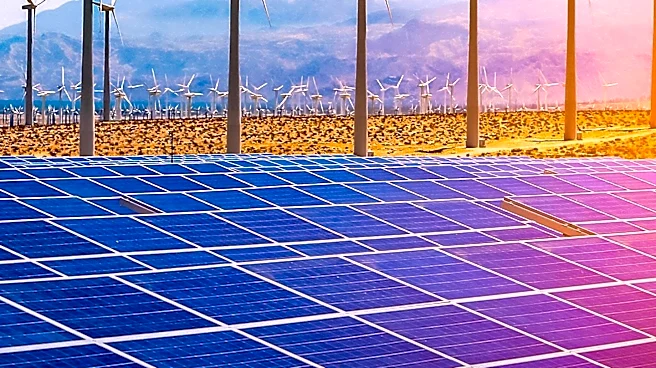
A coalition of ten prominent clean energy organizations, including Advanced Energy United, has formally expressed their support for the manager’s amendment to the Bipartisan American Affordability and Jobs Act of 2026 (BAAJA). These groups, which represent
diverse sectors such as wind, solar, energy storage, geothermal, hydropower, distributed energy resources, and nuclear, have urged congressional leadership to pass the bill before the conclusion of the 119th Congress. The coalition emphasizes that the passage of BAAJA is crucial for achieving the necessary scale of clean energy to ensure a low-cost, reliable, and clean energy future. They view the bill as a product of extensive debate, dialogue, public comment, and analysis, with the manager’s amendment incorporating feedback to strengthen an already significant bipartisan package.
Why It's Important?
This collective endorsement from a broad spectrum of clean energy organizations underscores the critical role of legislative reform in advancing the clean energy transition in the U.S. Permitting reform is often cited as a major bottleneck for new energy infrastructure projects, including those for renewable energy. By streamlining these processes, BAAJA could significantly accelerate the deployment of wind, solar, and other clean energy technologies, which is essential for meeting climate goals and enhancing energy security. The bill's passage would also signal a bipartisan commitment to clean energy, potentially unlocking substantial private investment and fostering innovation in the sector. For consumers, a more efficient and expanded clean energy grid could lead to lower electricity costs and greater energy reliability. Conversely, failure to pass such legislation could perpetuate delays, increase project costs, and hinder the U.S.'s ability to compete in the global clean energy market.
What's Next?
The immediate next step is for congressional leadership to consider and potentially pass the Bipartisan American Affordability and Jobs Act of 2026, including its manager’s amendment, before the end of the 119th Congress. The strong support from a unified front of clean energy organizations will likely add pressure on lawmakers to act. If passed, the legislation would then move towards implementation, which would involve federal agencies updating their permitting processes and guidelines. This could lead to a more expedited review and approval of clean energy projects across the country. Conversely, if the bill does not pass, the clean energy industry may continue to face significant hurdles in project development, potentially leading to slower growth and increased costs. The coalition's ongoing advocacy efforts will be crucial in either scenario, as they continue to push for policies that support a robust clean energy future.
Beyond the Headlines
The push for permitting reform extends beyond mere bureaucratic efficiency; it touches upon fundamental questions of infrastructure development, environmental protection, and economic competitiveness. The bipartisan nature of BAAJA, as highlighted by the clean energy groups, suggests a growing consensus on the need to modernize regulatory frameworks to accommodate the energy transition. However, the specifics of permitting reform often involve balancing environmental safeguards with development timelines, a tension that can lead to complex legal and political challenges. The involvement of diverse energy sectors, from wind and solar to nuclear and geothermal, indicates a holistic approach to clean energy, recognizing that a mix of technologies will be necessary to achieve a resilient and decarbonized grid. This legislative effort could set a precedent for how future large-scale infrastructure projects, not just in energy, are planned and executed in the U.S., emphasizing efficiency while aiming to maintain environmental integrity.