






What's Happening?
An environmental group has filed a lawsuit against the federal government, alleging that officials have unlawfully delayed granting protection to two imperiled species in Nevada. The lawsuit, brought by the Center for Biological Diversity, claims that the U.S.
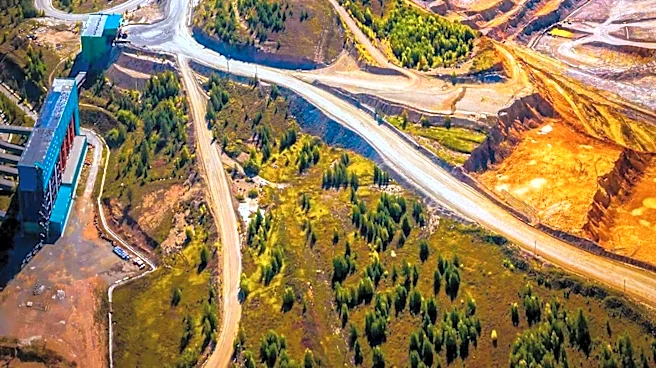
Fish and Wildlife Service missed its 12-month deadline to make a final decision on protecting the Amargosa toad and the Oasis Valley speckled dace under the Endangered Species Act. These two species are unique to the spring-fed wetlands near Beatty, Nevada, an area currently experiencing a 'gold rush' with multiple proposed mining projects. The complaint argues that 'anthropogenic stressors, including loss of habitat from groundwater pumping for nearby gold mines, are pushing these animals toward extinction.' The multinational mining company AngloGold Ashanti is close to obtaining final approval for its North Bullfrog Mine, and other companies have proposed six additional gold mines in the immediate vicinity.
Why It's Important?
This lawsuit highlights a critical conflict between economic development and environmental conservation in the U.S., particularly in resource-rich but ecologically sensitive regions. The potential extinction of species found nowhere else on Earth underscores the irreversible consequences of unchecked industrial expansion. The Amargosa toad and Oasis Valley speckled dace serve as indicator species for the health of the unique desert wetland ecosystem, and their decline could signal broader environmental degradation. The legal action aims to compel federal agencies to adhere to established timelines for species protection, emphasizing the importance of the Endangered Species Act as a safeguard against biodiversity loss. The outcome of this case could set a precedent for how future mining projects are evaluated and regulated in areas with endangered species, potentially influencing environmental impact assessments and the balance between economic gain and ecological preservation.
What's Next?
The Center for Biological Diversity's lawsuit seeks to compel the U.S. Fish and Wildlife Service to make a timely decision on listing the Amargosa toad and Oasis Valley speckled dace under the Endangered Species Act. If the court rules in favor of the conservationists, the agency would be mandated to expedite its decision, potentially leading to federal protections for the species. Such protections could impose stricter environmental regulations on mining operations in Nye County, including AngloGold Ashanti's North Bullfrog Mine and other proposed projects. This could necessitate further modifications to mining plans, increased water conservation efforts, or even restrictions on new developments to protect critical habitats. Conversely, if the lawsuit is unsuccessful, the species could remain vulnerable to the impacts of mining, potentially accelerating their path toward extinction. The case will likely draw significant attention from environmental groups, mining companies, and local communities in Nevada.
Beyond the Headlines
Beyond the immediate legal and environmental concerns, this 'gold rush' in Nye County and the subsequent lawsuit illuminate the complex interplay of historical land use, economic aspirations, and ecological responsibility in the American West. The region's history of resource extraction often clashes with the delicate balance of its unique ecosystems. The Amargosa toad, for instance, had previously seen its numbers rise due to local conservation efforts, demonstrating that human intervention can both harm and heal. This case forces a re-evaluation of the long-term sustainability of economic models that prioritize short-term resource extraction over the preservation of irreplaceable natural heritage. It also raises ethical questions about humanity's stewardship of the planet and the value placed on biodiversity, especially when it conflicts with perceived economic prosperity. The outcome will reflect not just legal interpretations, but also societal priorities regarding environmental protection.