
What's Happening?
Israel and Lebanon have agreed to renew a ceasefire and establish Lebanese security zones, following U.S.-mediated talks. The agreement, co-signed by Israel, Lebanon, and the United States, requires Hezbollah
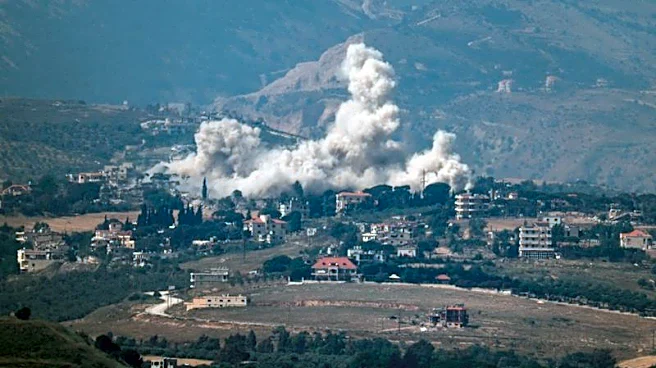
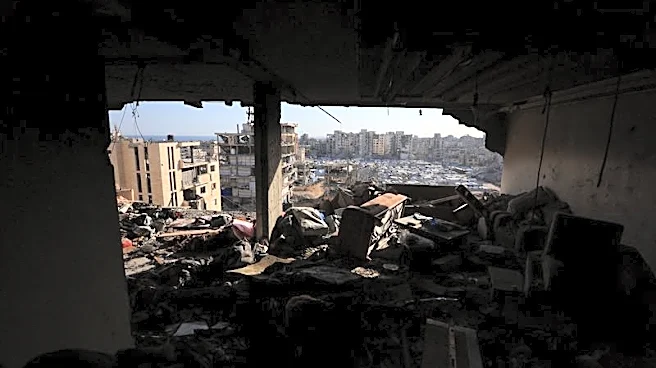
to remove its fighters from areas south of the Litani River and cease its fire. The Lebanese Armed Forces will take exclusive control of newly created pilot zones. Despite the ceasefire, Israeli forces have conducted strikes in southern Lebanon, and Hezbollah has continued attacks on Israeli troops and civilians. The situation remains tense, with ongoing violence despite the ceasefire agreement.
Why It's Important?
The renewed ceasefire between Israel and Lebanon is significant as it aims to reduce hostilities in a region marked by prolonged conflict. The agreement seeks to limit Iran's influence through Hezbollah, a key player in the region's instability. The establishment of security zones under Lebanese control could stabilize the area, but the exclusion of Hezbollah from the talks raises questions about the agreement's enforceability. The U.S.'s role in mediating the ceasefire highlights its strategic interest in Middle Eastern stability, potentially impacting U.S.-Iran relations and broader geopolitical dynamics.
What's Next?
The agreement outlines continued diplomatic and military talks between Israel and Lebanon, with the next round scheduled for late June. The success of the ceasefire depends on Hezbollah's compliance and the Lebanese Armed Forces' ability to maintain control in the designated zones. Potential reactions from Iran, which supports Hezbollah, could influence the ceasefire's durability. The international community will likely monitor the situation closely, as any escalation could affect regional stability and U.S. diplomatic efforts in the Middle East.