


What's Happening?
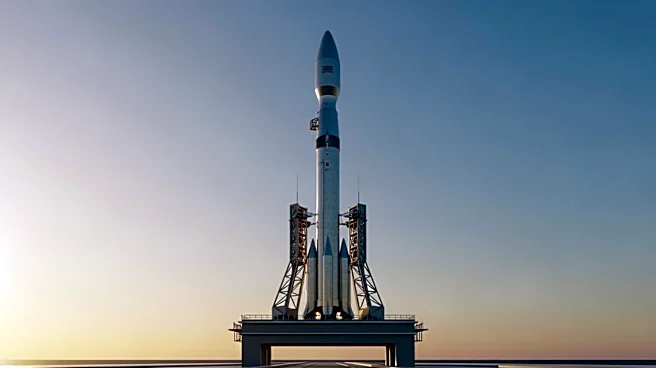
A NASA sounding rocket was launched from the Poker Flat Research Range in Fairbanks, Alaska, as part of the FOXSI-5 mission to study solar flares using X-rays. The mission, led by Juan Camilo Buitrago-Casas from the University of California, Berkeley,
aims to capture data on solar flare activity. The launch was successful, capturing a multi-point snapshot of solar flare activity due to an active solar region. The mission is part of a continuing effort to understand solar flares, which are bursts of radiation that can affect Earth's magnetic field and disrupt satellites and communications.
Why It's Important?
The study of solar flares is crucial as they can have significant impacts on Earth's magnetic field, potentially disrupting satellite operations and communications. By understanding these flares better, scientists can improve predictions and mitigate the effects on technology and infrastructure. The mission also highlights the collaboration between NASA and academic institutions, advancing scientific knowledge and technological capabilities.
What's Next?
The data collected from this mission will be analyzed to gain insights into solar flare mechanisms. Future missions may be planned based on these findings to further explore solar phenomena. The ongoing research could lead to improved forecasting models for solar activity, benefiting industries reliant on satellite communications and navigation systems.