



What's Happening?
Representative Jeff Crank (CO-05) introduced a resolution last Friday to condemn socialism in all its forms and specifically target the Democratic Socialists of America (DSA). According to Representative Crank, the DSA's policies aim to fundamentally
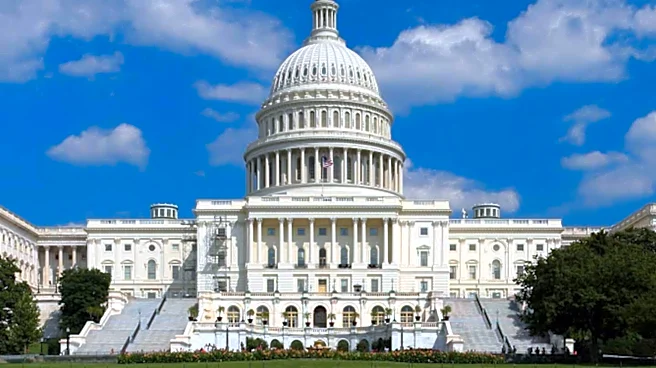
alter America's electoral and political systems. The resolution highlights what Representative Crank considers to be 'un-American tenets' of the DSA, including proposals to allow non-citizens and incarcerated individuals to vote in American elections. It also seeks to reaffirm support for free, fair, and secure elections, emphasizing that American elections should be decided solely by American citizens. Representative Crank stated in an interview with Fox News Digital that the resolution is intended to compel Democrats to take a public stance against the DSA and socialism. He asserts that the DSA has significantly influenced elections across the country and has co-opted a substantial portion of the Democratic party. The resolution is scheduled for a vote on the House Floor early this week.
Why It's Important?
This resolution is important because it represents a direct legislative effort to formally denounce a specific political ideology and organization within the U.S. political landscape. If passed, it could intensify the ideological divide within Congress and potentially influence public perception of socialist policies and the Democratic Party. The resolution's focus on electoral integrity, particularly regarding who is eligible to vote, touches upon fundamental aspects of American democracy and could fuel ongoing debates about voting rights and election security. For the Democratic Party, the resolution forces a difficult choice: either align with the DSA and risk being labeled as socialist, or distance themselves from the organization, potentially alienating a segment of their progressive base. This move could also set a precedent for future legislative actions targeting specific political groups or ideologies deemed contrary to American values by a segment of lawmakers.
What's Next?
The resolution is slated for a vote on the House Floor early this week. The outcome of this vote will indicate the level of congressional support for formally condemning socialism and the DSA. Depending on the vote's success or failure, there could be significant political repercussions. If the resolution passes, it could embolden conservative lawmakers to pursue further legislative actions against socialist-leaning policies or organizations. Conversely, if it fails, it might be seen as a rejection of such condemnations, potentially strengthening the position of progressive groups. The debate surrounding the resolution is likely to generate considerable media attention, further polarizing public discourse on socialism and the role of the DSA in American politics. Political leaders, businesses, and civil society groups will likely react to the vote, potentially leading to increased advocacy or counter-advocacy efforts.
Beyond the Headlines
Beyond the immediate political implications, this resolution touches upon deeper questions about the boundaries of political discourse and the definition of 'American tenets.' The condemnation of socialism, an ideology with a long history of varying interpretations and applications, raises questions about ideological pluralism in the U.S. and the extent to which certain political beliefs can be officially sanctioned or denounced by the government. The resolution's emphasis on who should vote also highlights ongoing societal tensions regarding citizenship, incarceration, and democratic participation. This legislative action could contribute to a broader cultural shift, where political ideologies are increasingly framed in stark, oppositional terms, potentially hindering constructive dialogue and compromise. It also underscores the ongoing struggle to define national identity and values in a diverse and rapidly changing society.