


What's Happening?
U.S. Trade Representative Jamieson Greer has issued a stern warning that the President Trump administration will not tolerate any retaliation from Canada if the U.S. proceeds with its threat to impose a 50 percent tariff on hundreds of Canadian goods
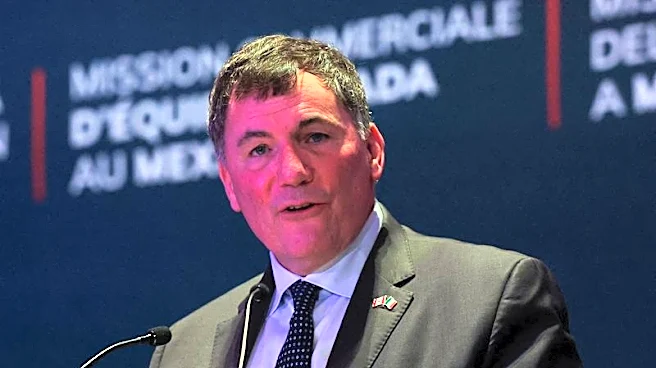
starting August 19. Greer stated that the U.S. is focused on protecting its domestic supply chains and that the tariffs are not Canada-specific but part of a global strategy. He characterized Canada's past retaliatory measures, such as banning U.S. liquor, as "the kind of things that China would do." Trade talks between Greer and Canada-U.S. Trade Minister Dominic LeBlanc have been ongoing and described as "constructive," but industry sources suggest Canada views the August 19 deadline as a critical point, indicating a lack of political appetite to continue talks if tariffs are implemented.
Why It's Important?
This development signifies a hardening of the President Trump administration's stance on trade disputes, particularly with close allies. The explicit warning against retaliation underscores the administration's determination to enforce its trade policies without perceived interference, potentially escalating tensions. For Canada, the imposition of 50 percent tariffs on a wide range of goods would have significant economic consequences, impacting various industries and potentially leading to job losses. The U.S. position, framed as protecting domestic supply chains and not a "trade war," highlights a shift towards a more unilateral approach to trade, where the U.S. prioritizes its own economic interests above traditional multilateral trade norms. This could set a precedent for how the U.S. interacts with other trading partners, potentially leading to more frequent and aggressive trade disputes.
What's Next?
President Trump and Prime Minister Mark Carney are expected to be presented with "options" for a potential path forward before the August 19 deadline. While Canada is reportedly willing to make concessions on issues like provincial alcohol bans and dairy import quotas, it is also pushing for a substantial reduction in existing sectoral tariffs on autos and steel. The U.S. has reportedly offered a new proposal to lower some sectoral tariffs, but not to the extent Canada desires. If the tariffs are imposed, Canada's willingness to continue negotiations is uncertain, potentially leading to a prolonged trade dispute. The situation could also prompt other countries to re-evaluate their trade strategies with the U.S., anticipating similar demands and warnings against retaliation.
Beyond the Headlines
The U.S. Trade Representative's comments, particularly likening Canada's retaliatory actions to those of China, reveal a deeper geopolitical framing of trade disputes. This rhetoric suggests that the administration views any challenge to its trade policies, even from allies, as a threat to its economic sovereignty. The former Canadian ambassador to the U.S., Frank McKenna, countered this, arguing that Canada is simply "standing up for ourselves" against "unfair, illegal measures." This exchange highlights the clash between a "might is right" approach to trade and the principles of reciprocal action and international law. The ongoing trade tensions could lead to a re-evaluation of the U.S.-Canada relationship, traditionally one of the strongest bilateral ties, and potentially influence broader alliances and trade agreements in North America and beyond.