




What's Happening?
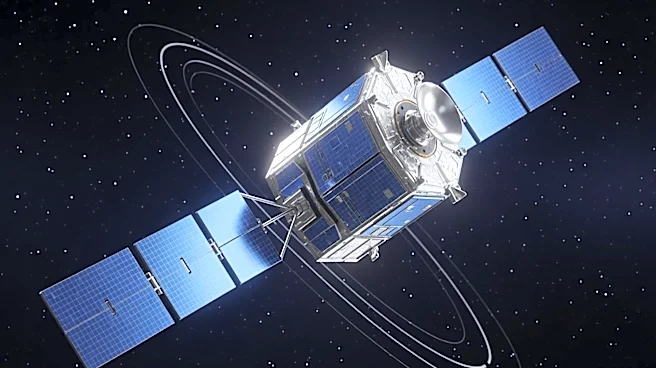
NASA has announced that the Nancy Grace Roman Space Telescope is scheduled for launch as early as September 2026, ahead of its initial commitment to launch by May 2027. The announcement was made by NASA Administrator Jared Isaacman at a news conference
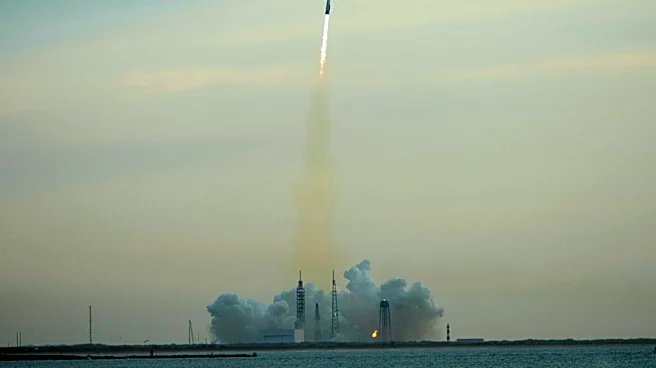
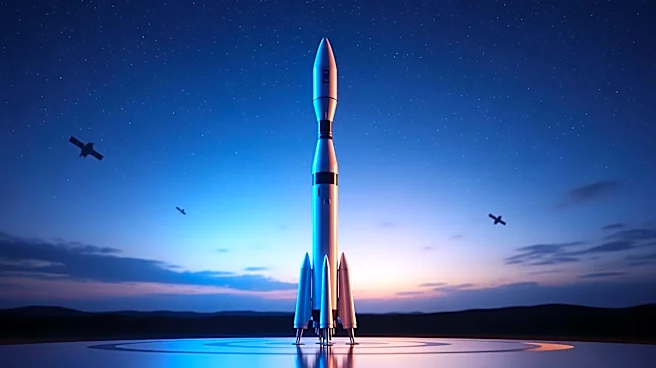
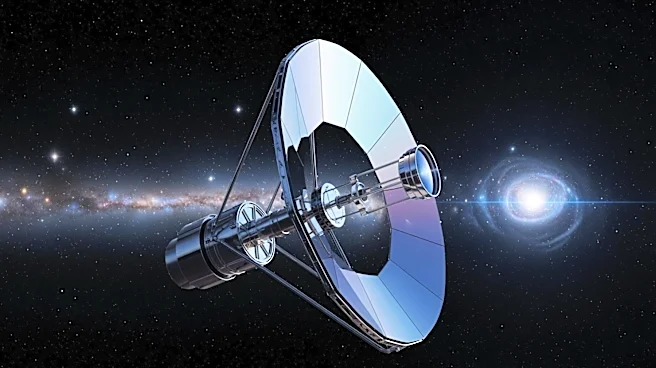
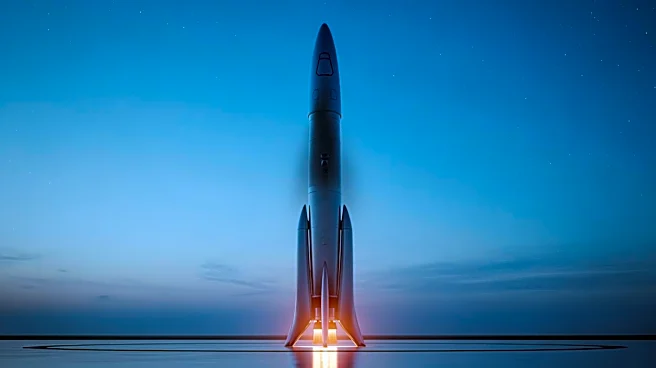
held at the Goddard Space Flight Center in Greenbelt, Maryland. The Roman Space Telescope is designed to pair a large field of view with infrared vision, enabling it to survey vast areas of the sky. The mission aims to explore dark energy, dark matter, and exoplanets, while also providing opportunities for astronomers to study various cosmic phenomena. By the end of its five-year primary mission, the telescope is expected to create a 20,000-terabyte data archive, which will help scientists study 100,000 exoplanets, hundreds of millions of galaxies, and billions of stars. The telescope will be launched on a SpaceX Falcon Heavy rocket from NASA's Kennedy Space Center in Florida.
Why It's Important?
The launch of the Nancy Grace Roman Space Telescope represents a significant advancement in astronomical research capabilities. Its ability to survey large areas of the sky with infrared vision will provide unprecedented opportunities for scientists to explore cosmic phenomena, potentially leading to new discoveries in the fields of dark energy, dark matter, and exoplanets. The data collected by the telescope will be invaluable for researchers, offering insights into the universe's structure and evolution. This mission underscores the importance of collaboration between public investment, institutional expertise, and private enterprise in achieving ambitious scientific goals. The telescope's launch and subsequent research could have far-reaching implications for our understanding of the universe and may inspire future space exploration missions.
What's Next?
NASA and SpaceX will continue to provide updates on the specific launch date and prelaunch preparations for the Roman Space Telescope. As the launch date approaches, further details about the mission's objectives and potential scientific breakthroughs are expected to be shared. The telescope's deployment will likely prompt increased interest and collaboration among astronomers and research institutions worldwide, as they prepare to utilize the vast data archive that the mission will generate. The success of this mission could pave the way for future space telescopes and research initiatives aimed at exploring the universe's mysteries.