
What's Happening?
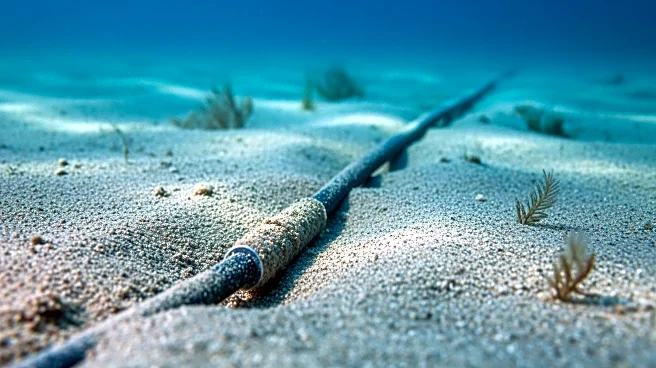
Arelion, a Swedish telecommunications company, has reported damage to its BCS East submarine cable, which connects Latvia and Lithuania. The damage occurred near the cable's landing station in Liepāja,
Latvia, and was reportedly caused by a ship passing overhead. The Latvian armed forces have noted that the ship initially sailed over an inactive cable before altering its course towards the BCS East cable. An investigation has been launched by Latvian authorities, including the police and coast guard, to determine whether the damage was accidental or intentional. The ship involved has docked at Liepāja, and its crew is cooperating with the investigation. Despite the incident, Latvian users have not experienced disruptions, as traffic was rerouted. Repairs are expected to be completed within one to two weeks.
Why It's Important?
The incident highlights the vulnerability of critical infrastructure such as submarine cables, which are essential for international communications. Given the geopolitical tensions in the Baltic region, particularly between the Baltic states and Russia, the security of these cables is a growing concern. Damage to such infrastructure can have significant economic and security implications, potentially affecting communication and data transfer between countries. Ensuring the integrity and security of these cables is crucial for maintaining stable international relations and economic activities in the region.
What's Next?
The ongoing investigation will seek to clarify the circumstances surrounding the damage to the cable. Depending on the findings, there may be increased calls for enhanced security measures and monitoring of submarine cables in the region. This could involve collaboration between Baltic states and international partners to safeguard these critical infrastructures. Additionally, the incident may prompt discussions on international regulations and agreements to protect submarine cables from accidental or intentional damage.