



What's Happening?
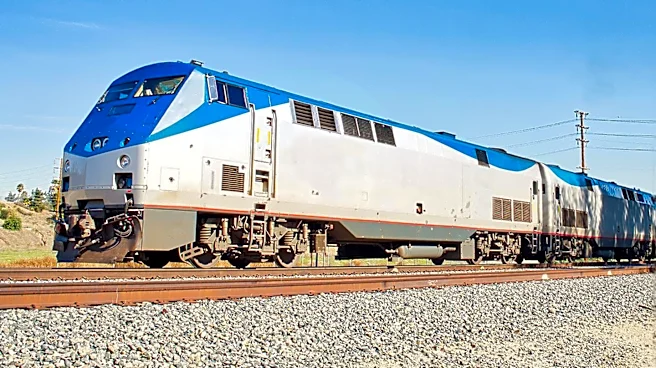
A fatal incident occurred in Berrien County, Michigan, on Tuesday morning when an Amtrak train collided with a vehicle, resulting in the death of the vehicle's driver. The crash took place around 10 a.m. in the 14000 block of Red Arrow Highway, specifically
at the East Road crossing. According to Chikaming Township police, a southbound Amtrak train struck a westbound vehicle at the crossing. Upon arrival, officers were informed that the vehicle was engulfed in flames, which firefighters quickly extinguished. The driver, identified as 72-year-old Paul Rizzo of Lakeside, Michigan, was the sole occupant of the vehicle and was pronounced dead at the scene. The incident is currently under investigation by local authorities.
Why It's Important?
This tragic event highlights ongoing concerns regarding railway safety and the potential dangers at railroad crossings across the United States. Fatal collisions between trains and vehicles underscore the critical need for enhanced safety measures, public awareness campaigns, and infrastructure improvements at such intersections. For communities like Berrien County, these incidents can raise questions about the adequacy of existing warning systems, signage, and crossing designs. The investigation into this particular crash will likely examine factors such as driver behavior, train speed, and the functionality of crossing signals, which could inform future safety protocols. The incident also serves as a somber reminder of the human cost associated with transportation accidents, impacting families and local communities. Railroad companies, local governments, and transportation safety agencies often review such incidents to identify patterns and implement preventative measures, aiming to reduce the frequency and severity of similar occurrences nationwide. The outcome of the investigation could influence policy discussions on railway safety standards and funding for infrastructure upgrades.
What's Next?
The crash remains under investigation by Chikaming Township police. Authorities will likely conduct a thorough review, which may include examining surveillance footage, interviewing witnesses, and analyzing data recorders from the train and potentially the vehicle. The investigation will aim to determine the precise sequence of events leading to the collision and identify any contributing factors. Depending on the findings, recommendations for improved safety measures at the East Road crossing or similar locations could be issued. This might involve upgrades to warning systems, changes in traffic patterns, or increased enforcement of traffic laws at railroad crossings. The family of the deceased driver will also be navigating the aftermath of this tragedy. Public awareness campaigns about railroad crossing safety, often conducted by organizations like Amtrak and local law enforcement, may be reinforced in the wake of such incidents to prevent future fatalities. The broader community will likely await the results of the investigation to understand the circumstances and consider any necessary actions to enhance safety.
Beyond the Headlines
Beyond the immediate investigation, this incident touches upon the broader societal challenge of balancing efficient transportation with public safety. As rail traffic, both passenger and freight, continues to be a vital component of the U.S. infrastructure, the risk of train-vehicle collisions remains a persistent concern. The incident may prompt a deeper look into the psychological factors influencing driver behavior at crossings, such as distraction, misjudgment of train speeds, or disregard for warning signals. It also brings to light the ongoing debate about the responsibility shared between drivers, railway operators, and local municipalities in ensuring safety. The long-term implications could include increased advocacy for grade separation projects, where roads are built over or under railway tracks, to eliminate at-grade crossings entirely. While costly, such projects are considered the most effective way to prevent these types of accidents. The incident also underscores the need for continuous technological advancements in railway safety, including advanced sensor systems and automated warning technologies, to mitigate risks and protect lives.