






What's Happening?
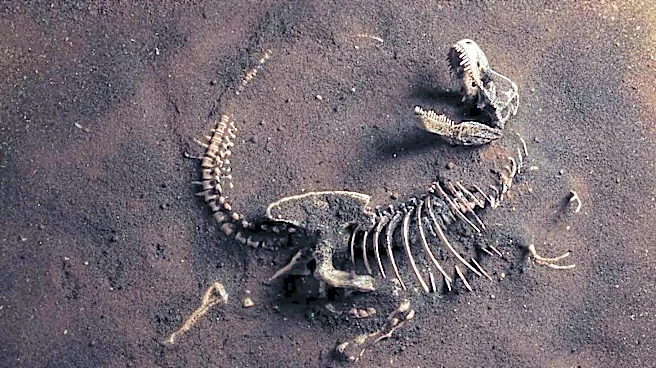
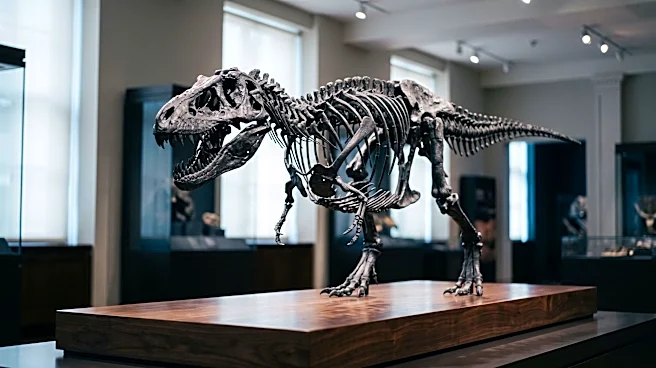
A skeleton of a Nanotyrannus, nicknamed 'Jodi', was sold for $47.3 million at a Sotheby's auction in New York. This sale follows the recent scientific confirmation that Nanotyrannus is a distinct genus, separate from a juvenile Tyrannosaurus rex, a long-standing
debate in the paleontological community. The specimen, approximately 10 feet tall, was discovered in Montana by rancher Jodi Pierson and later excavated by commercial paleontologist Clayton Phipps. It is considered one of only three known Nanotyrannus skeletons and features 191 fossil-bone elements and a well-preserved, nearly complete skull. This auction marks the second-most valuable dinosaur fossil ever sold, following another T. rex, 'Gus', which fetched $50.1 million in July.
Why It's Important?
The sale of 'Jodi' for a significant sum highlights a growing trend of privately owned dinosaur fossils, raising concerns within the scientific community. Paleontologists like Professor Steve Brusatte of the University of Edinburgh express worry that such valuable specimens might disappear into private collections, limiting public access and scientific study. Museums and universities often cannot afford these high prices, potentially hindering research and public education. While some argue that commercial sales fund further excavations and that these fossils may eventually find their way to public display, the immediate impact is a reduction in accessible scientific material for researchers and the general public. This trend could shift the landscape of paleontological discovery and preservation, prioritizing private ownership over collective scientific and educational benefit.
What's Next?
The identity of the buyer of 'Jodi' has not been disclosed, meaning the skeleton's immediate future regarding public display or scientific accessibility remains uncertain. The ongoing debate between commercial sales and public ownership of significant fossil discoveries is likely to intensify. Scientists will continue to advocate for policies that ensure important paleontological finds are available for study and public viewing. Future discoveries of rare dinosaur skeletons may face similar auction scenarios, prompting further discussion on ethical guidelines for fossil sales and the role of private collectors versus public institutions in preserving natural history. The scientific community will likely monitor the whereabouts of 'Jodi' in hopes of future research opportunities.
Beyond the Headlines
The auction of 'Jodi' touches upon deeper ethical and cultural implications concerning the ownership of natural heritage. The debate extends beyond mere financial transactions, questioning whether such unique scientific specimens should be treated as commodities or as invaluable resources for humanity's collective understanding of Earth's history. The commercialization of fossils could lead to a 'treasure hunt' mentality, potentially incentivizing less ethical excavation practices or the withholding of discoveries from scientific scrutiny. It also raises questions about equitable access to scientific knowledge and the potential for private wealth to dictate the availability of irreplaceable historical artifacts, impacting educational outreach and the inspiration of future generations of scientists.