






What's Happening?
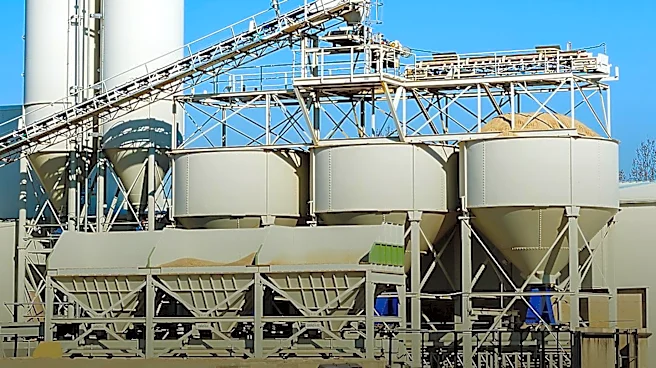
A new study by researchers at ETH Zurich, in collaboration with the U.S. company Heirloom Carbon Technologies, suggests that cement production, a major source of CO2 emissions, could become carbon negative. The research indicates that combining cement kilns
with Direct Air Capture (DAC) technology, specifically calcium looping, could significantly reduce and even reverse CO2 emissions. The study found that 78% of a cement kiln's carbon emissions could be offset if the kiln operates on electricity rather than fossil fuels. Calcium looping, which involves heating limestone to separate CO2 and quicklime, is similar to cement production processes. The captured CO2 is then compressed and stored underground, not bound within the cement itself. The efficiency of CO2 removal is projected to range between 85% and 96% by 2050, depending on the energy mix used.
Why It's Important?
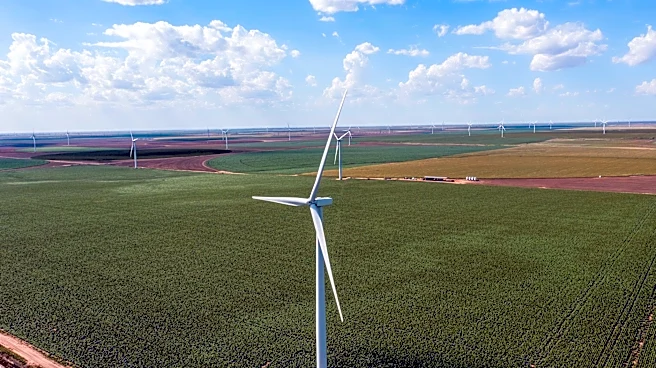
This development holds significant importance for global efforts to combat climate change, as cement production accounts for approximately 4 billion metric tons of CO2 annually. The potential to transform a major industrial emitter into a carbon-negative process offers a promising pathway for decarbonization. The study's findings, particularly the collaboration with a U.S. company already operating commercial DAC systems, highlight the practical applicability and scalability of this approach. If successfully implemented, this technology could drastically reduce the carbon footprint of the construction industry, a sector vital to infrastructure development and economic growth. It also underscores the critical role of clean energy sources, such as wind and solar, in achieving net-negative emissions for energy-intensive industrial processes, thereby influencing investment and policy decisions in both energy and manufacturing sectors.
What's Next?
The study's projections are based on future scenarios up to 2050, assuming substantial progress in decarbonizing electricity supplies and the widespread industrial use of electric calcining kilns, which are not yet common. Further research is needed to conduct a detailed cost analysis to determine the economic viability of integrating DAC with cement production on a large scale. The next steps will likely involve pilot projects and further technological advancements to refine the process and reduce operational costs. The success of this approach will depend on continued investment in clean energy infrastructure and the development of more efficient DAC technologies. Policy frameworks that incentivize carbon capture and storage, as well as the use of renewable energy in industrial processes, will also be crucial for its widespread adoption.
Beyond the Headlines
Beyond its immediate environmental benefits, this research touches upon broader implications for industrial sustainability and resource management. The concept of a circular economy is reinforced, as limestone can be reused in the process after absorbing CO2. The energy-intensive nature of DAC processes, however, highlights the critical need for a fully decarbonized electricity grid to achieve true net-negative emissions. This raises ethical considerations regarding the equitable distribution of clean energy resources and the potential for increased energy demand. Furthermore, the long-term storage of captured CO2 presents its own set of challenges, including site selection, monitoring, and public acceptance. The integration of DAC into existing industrial processes like cement production could serve as a model for other hard-to-abate sectors, fostering innovation in carbon management and accelerating the transition to a low-carbon economy.