









What's Happening?
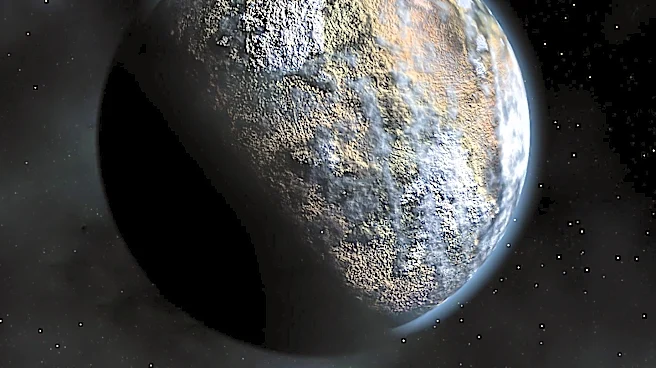
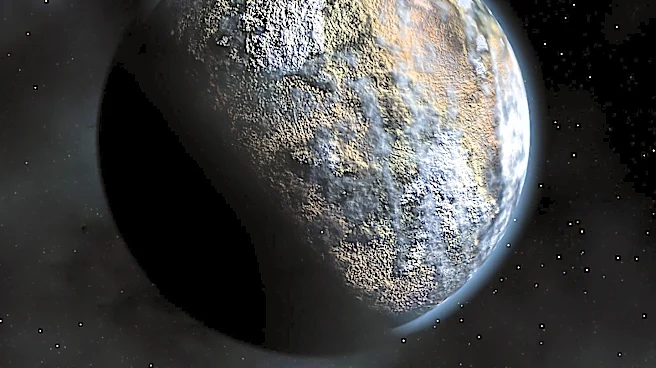
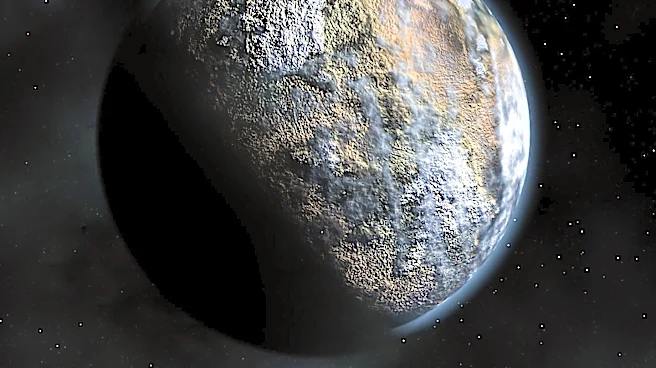
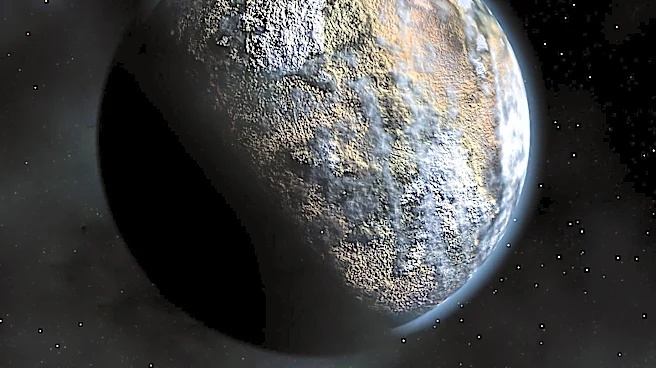
Astronomers have discovered an atmosphere around the rocky exoplanet LHS 1140b, located 48 light-years from Earth. This planet, situated in the habitable zone of its star, has an atmosphere containing helium, marking the first direct detection of an atmosphere on a rocky exoplanet.
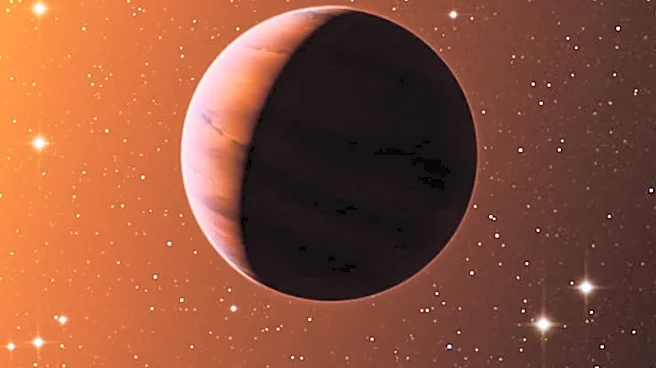
The discovery suggests that LHS 1140b could potentially support liquid water, a key condition for life. The planet orbits a red dwarf star, which typically emits radiation that can strip away planetary atmospheres, making this finding particularly significant.
Why It's Important?
The detection of an atmosphere on LHS 1140b is a major step forward in the search for habitable planets beyond our solar system. It challenges previous assumptions about the ability of planets orbiting red dwarf stars to retain atmospheres. This discovery enhances our understanding of planetary formation and the conditions necessary for life. It also establishes LHS 1140b as a prime target for future observations, potentially using advanced telescopes like the James Webb Space Telescope, to further explore its atmospheric and surface characteristics.
What's Next?
Future research will focus on characterizing the atmosphere of LHS 1140b in greater detail, including the search for water and other life-supporting elements. The planet's proximity and its position in the habitable zone make it an ideal candidate for further study. Researchers aim to use existing and upcoming telescopes to gather more precise data, which could provide insights into the potential for life on this and similar exoplanets. The findings could also inform the search for other habitable worlds in the universe.