



What's Happening?
Organizers are making a final fundraising push to complete a memorial for Fred Rouse, Fort Worth's only recorded Black lynching victim. Fred Rouse III, president of the Tarrant County Coalition for Peace and Justice, stated that an additional $700,000
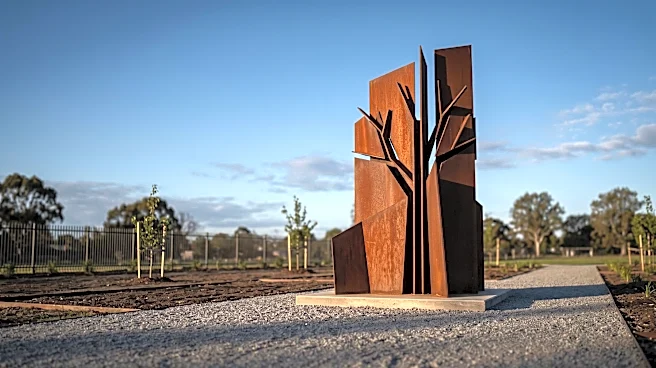
is needed to finish the Mr. Fred Rouse Memorial, located at 1000 NE 12th St. The total estimated cost for the project has nearly doubled from the original $1.16 million reported in December 2023, now reaching approximately $2.1 million. This increase is attributed to construction delays, inflating costs, and a major donor withdrawing support. The coalition launched its final fundraising campaign this summer, hosting community events in August with the goal of securing the remaining funds by the end of September. The memorial is planned to open later this year, coinciding with the 105th anniversary of Fred Rouse's lynching on December 11, 1921. Significant progress has been made, including walking paths and metal steel panels shaped like the 'death tree,' but irrigation, vegetation, fencing, and a mural are still unfinished.
Why It's Important?
The completion of the Fred Rouse Memorial is a significant step in acknowledging and confronting a painful chapter of racial injustice in Fort Worth's history. This project serves as a tangible reminder of the systemic violence faced by Black Americans during the Jim Crow era, particularly the brutal act of lynching. The memorial's establishment is crucial for historical education, fostering community healing, and promoting racial reconciliation. The financial challenges faced by the project highlight the difficulties often encountered in funding initiatives that address historical injustices, reflecting broader societal debates about reparations and historical accountability. Its completion will provide a permanent space for reflection and remembrance, ensuring that the story of Fred Rouse and the broader context of racial violence are not forgotten. This effort contributes to a national movement to recognize and memorialize victims of racial terror, influencing how communities across the U.S. grapple with their past.
What's Next?
The immediate focus for the Tarrant County Coalition for Peace and Justice is to raise the remaining $700,000 by the end of September. This will involve continued community outreach, fundraising events, and appeals to both individual donors and businesses. If successful, the coalition plans to complete the remaining construction, including irrigation, vegetation, fencing, and the mural, to ensure the memorial can open later this year. The planned opening around December 11, the 105th anniversary of Fred Rouse's lynching, will be a significant event for the Fort Worth community. Beyond the physical completion, the memorial is expected to become a site for educational programs and community dialogues on racial justice and history. The ongoing efforts to fund and complete this memorial could also inspire similar initiatives in other communities grappling with their own histories of racial violence.
Beyond the Headlines
The Fred Rouse Memorial project delves deeper than just commemorating a historical event; it addresses the enduring legacy of racial terror and its impact on contemporary society. The doubling of the project's cost and the withdrawal of a major donor underscore the complex and often challenging nature of funding initiatives that confront uncomfortable historical truths. This situation reflects broader societal tensions regarding historical memory, public acknowledgment of past wrongs, and the allocation of resources for such endeavors. The memorial's design, particularly the metal panels shaped like the 'death tree,' serves as a powerful and stark visual representation of the brutality of lynching, forcing a direct confrontation with the past. This project contributes to a national dialogue about how communities can move forward from historical injustices, emphasizing the importance of truth-telling and memorialization as foundations for healing and progress. It also highlights the role of grassroots organizations like the Tarrant County Coalition for Peace and Justice in driving these critical conversations and actions.