







What's Happening?
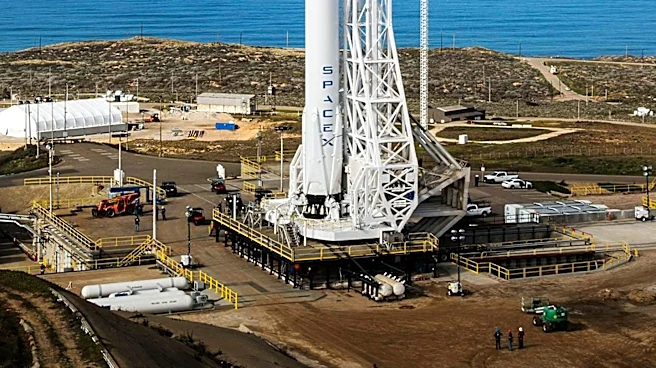
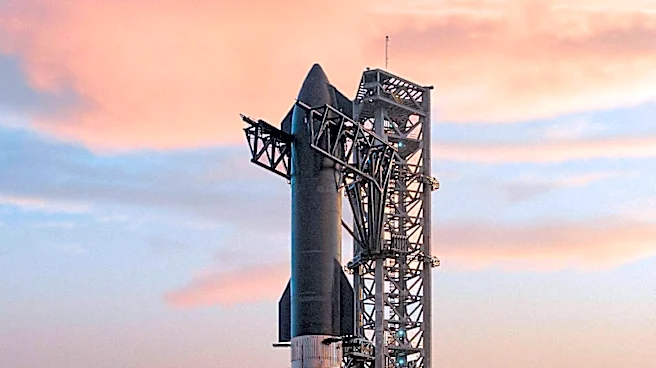
SpaceX is aiming for November 2026 to conduct the 15th integrated flight test of its Starship rocket. This ambitious mission plans to achieve a significant milestone by attempting to catch both the Starship upper stage and the Super Heavy booster at the launch
tower upon their return from space. The company has not yet announced an official launch date, but preparations for this test flight are reportedly underway at Starbase in South Texas. This upcoming flight represents a critical step in the development of the Starship system, which is designed for deep-space missions and rapid reusability. The dual-stage catch maneuver is a key component of SpaceX's strategy to make space travel more economical and frequent.
Why It's Important?
This planned Starship flight is crucial for the future of U.S. space exploration and the commercial space industry. Successfully catching both the Super Heavy booster and the Starship upper stage at the launch tower would demonstrate an unprecedented level of reusability for a super heavy-lift launch system. This capability is central to SpaceX's vision of significantly reducing the cost of space access, which could revolutionize satellite deployment, lunar missions, and eventually human missions to Mars. The success of this test would further solidify the U.S.'s leadership in advanced rocketry and reusable launch technology, potentially attracting more investment and fostering innovation within the aerospace sector. Conversely, any setbacks could impact the timelines for NASA's Artemis program, which plans to use Starship for lunar landings, and potentially delay other commercial space ventures relying on Starship's capabilities.
What's Next?
Following the current preparations, SpaceX will continue with ground testing and regulatory approvals leading up to the targeted November 2026 launch window. The company will need to secure all necessary licenses from the Federal Aviation Administration (FAA) for the flight, which typically involves environmental reviews and safety assessments. Engineers will be focused on refining the complex landing and catching mechanisms for both stages, gathering data from previous test flights to optimize performance. The outcome of this flight will heavily influence the development roadmap for Starship, potentially accelerating its operational deployment or necessitating further design modifications and test campaigns. The space community and investors will be closely watching for updates on the progress and the eventual launch attempt.
Beyond the Headlines
The successful execution of a dual-stage catch for Starship would represent a paradigm shift in space launch operations, moving beyond traditional vertical landings to a more integrated and potentially faster turnaround system. This approach could dramatically reduce the logistical and financial burdens associated with preparing rockets for subsequent flights, making space access more akin to air travel in terms of frequency and cost. The long-term implications extend to the establishment of permanent lunar bases and human settlements on Mars, as Starship is envisioned as the primary transport for these ambitious endeavors. The technological advancements required for such precise atmospheric re-entry and capture could also have spillover benefits for other industries, including advanced robotics, materials science, and autonomous systems, further cementing the U.S.'s position at the forefront of technological innovation.