






What's Happening?
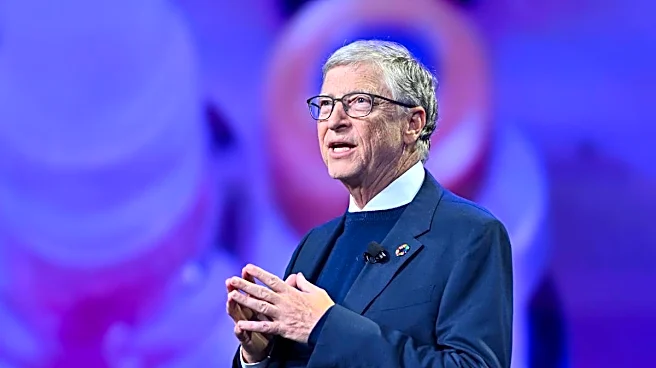
The Gates Foundation has announced a commitment of $1 billion over the next two years to broaden global access to artificial intelligence (AI). This initiative aims to leverage AI to address systemic social disparities across healthcare, education, agriculture,
and language accessibility. The funding, revealed in the organization’s annual Goalkeepers report, comes amidst warnings from Bill Gates himself about the potential for unchecked AI models to exacerbate global inequality and pose threats to jobs and human life. The foundation emphasizes the need for immediate intervention to ensure AI benefits underserved populations rather than widening societal divides. Key areas of focus for the funding include training AI models in local languages, improving health outcomes, upgrading educational tools, and informing agricultural practices for small farmers worldwide. The report highlighted that early AI models were predominantly trained on English text, effectively excluding vulnerable communities from the foundational data of modern software. Without deliberate efforts, the foundation cautions that advanced software will primarily cater to commercial entities, bypassing those who stand to gain the most.
Why It's Important?
This significant investment by the Gates Foundation underscores a critical juncture in the development and deployment of artificial intelligence. The foundation's concern that AI could either be a 'great equalizer' or a 'worst source of injustice' highlights the profound societal implications of this technology. By focusing on democratizing AI access, particularly in lower-income countries and underserved communities, the initiative aims to prevent a widening gap between the technologically advanced and those left behind. The emphasis on local language training and context-specific applications is crucial, as it addresses the current bias in AI development towards English-speaking populations. Successful implementation could lead to tangible improvements in global health outcomes, educational attainment, and agricultural productivity, directly impacting millions of lives. Conversely, failure to ensure equitable access could entrench existing inequalities, creating a future where the benefits of AI are concentrated among a privileged few, while the majority face increased economic instability and limited opportunities.
What's Next?
The Gates Foundation plans to distribute the $1 billion among external organizations working within its core social focus areas. This includes initiatives that integrate automated tools into routine clinical healthcare, classroom instruction, and agricultural practices. Grants will also support the creation of localized data repositories across a wider variety of global dialects. The foundation is actively engaging with major AI companies like OpenAI and Anthropic, with existing partnerships aimed at training health workers in Rwandan clinics and accelerating vaccine development. Approximately $400 million is earmarked for education, $400 million for healthcare, and $100 million for agriculture, with another $100 million for digital initiatives like expanding language data. The foundation acknowledges that these totals are a 'tiny proportion' compared to commercial AI investments but hopes to influence how technical resources from major AI companies contribute to these goals. Discussions are also expected at upcoming United Nations gatherings, where the UN Secretary-General has advocated for inclusive AI governance.
Beyond the Headlines
The Gates Foundation's pledge goes beyond mere financial aid; it represents a strategic effort to shape the ethical and equitable trajectory of artificial intelligence. The concern that AI could exacerbate global inequality touches upon deeper issues of technological colonialism and data bias. By prioritizing local languages and contexts, the foundation is challenging the dominant, often Western-centric, paradigm of AI development. This initiative also raises questions about the role of private philanthropy in addressing global technological disparities, especially when compared to the vast resources of commercial tech giants. The long-term success of this endeavor will depend not only on the deployment of AI tools but also on building sustainable local capacity and control over these technologies. It highlights the tension between rapid technological advancement and the need for thoughtful, inclusive development that considers the unique needs and challenges of diverse communities worldwide, rather than imposing one-size-fits-all solutions.