




What's Happening?
The Maryland Supreme Court has issued a ruling in Comptroller of Maryland v. The Potomac Edison Company, determining that certain equipment used for electricity transmission and distribution qualifies for the state's sales and use tax exemption for 'production
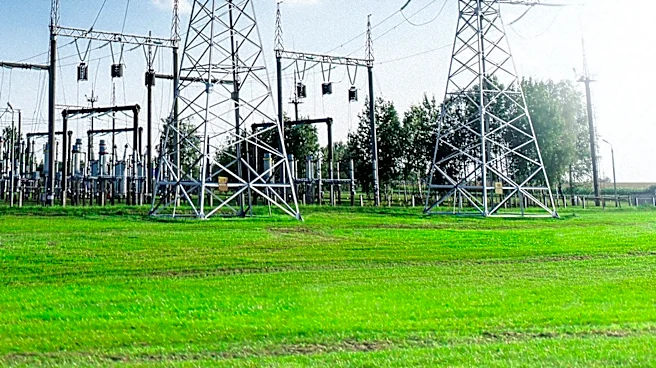
activity.' This includes conductors, substations, and transformers that adjust voltage. However, physical support hardware like clamps, bolts, brackets, and electric meters do not qualify, as they serve support or measurement functions rather than directly processing electricity. As a direct consequence of this decision, Maryland Comptroller Brooke E. Lierman announced on September 24 that her office would issue over $250 million in tax refunds and interest to electric companies. This ruling comes amidst ongoing efforts by individual utilities to increase rates, with Potomac Edison, the utility involved in the lawsuit, seeking a $52.8 million distribution revenue rate increase that would raise typical residential electric bills by 5.3% across seven Maryland counties. Separately, the Maryland Office of People's Counsel is pushing the Public Service Commission to compel Exelon's Maryland subsidiaries, BGE and Delmarva Power, to refund $32 million in 2025 revenue overcollections, a request the utilities are resisting by arguing that the Utility RELIEF Act removed the commission's authority for mid-cycle customer refunds.
Why It's Important?
This Supreme Court ruling has significant financial implications for both Maryland's state budget and its utility companies. The $250 million in tax refunds to electric companies will impact state revenue, potentially affecting other public services or future budget allocations. For utility companies, these refunds represent a substantial financial gain, which could influence their operational costs and investment strategies. However, the ongoing pursuit of rate increases by utilities like Potomac Edison, despite receiving these refunds, highlights a persistent tension between utility profitability and consumer affordability. The debate over whether the Utility RELIEF Act limits the Public Service Commission's ability to order customer refunds from companies like BGE and Delmarva Power underscores a critical regulatory challenge. This situation reflects a broader struggle to balance the financial health of utility providers with the need to protect consumers from escalating electricity costs, especially as residential electricity prices have already seen a 4.9% increase year-over-year in July.
What's Next?
The immediate next step involves the Maryland Comptroller's office processing and issuing the more than $250 million in tax refunds and interest to electric companies. Concurrently, Maryland regulators will continue to review Potomac Edison's request for a $52.8 million distribution revenue rate increase, which could lead to a 5.3% rise in residential electric bills for affected counties. The Public Service Commission will also need to address the ongoing dispute regarding the $32 million in alleged revenue overcollections by BGE and Delmarva Power, and determine whether the Utility RELIEF Act indeed limits its authority to mandate customer refunds. This decision will set a precedent for future regulatory actions concerning utility overcollections. Furthermore, the broader state push to address rising utility costs, including the implementation of the Utility RELIEF Act, will continue to be monitored for its effectiveness in providing bill relief and managing energy efficiency requirements. The outcome of these regulatory and legal processes will significantly shape the future landscape of electricity costs and utility accountability in Maryland.
Beyond the Headlines
The Maryland Supreme Court's decision, while seemingly a technical tax matter, delves into the fundamental definition of 'production activity' within the energy sector, potentially influencing how other states interpret similar tax exemptions for utility infrastructure. The distinction between equipment directly involved in electricity processing and that which provides support or measurement could set a precedent for future tax disputes and regulatory frameworks nationwide. This situation also highlights the complex interplay between judicial interpretations, legislative intent (as seen with the Utility RELIEF Act), and the economic realities faced by both utility companies and consumers. The ongoing debate over utility rate increases and revenue overcollections, particularly in the context of significant tax refunds, raises ethical questions about corporate responsibility and the equitable distribution of costs and benefits within the energy system. It underscores the challenge of ensuring affordable and reliable energy while allowing utilities to maintain and upgrade critical infrastructure, especially as the demand for electricity continues to grow, partly driven by new technologies like AI data centers.