

What's Happening?
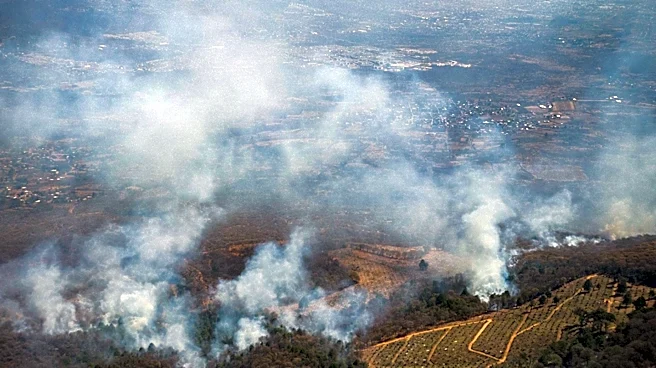
Colorado is currently experiencing a significant wildfire season, with four active fires burning across the state, impacting over 156,000 acres. The National Interagency Fire Center (NIFC) data, updated on October 31, 2026, indicates that these fires are,
on average, 93% contained. The largest of these is the Aspen Acres Fire in Custer County, which has consumed 102,007 acres and is 96% contained. Other major incidents include the Gold Mountain Fire in Ouray County (39,747 acres, 92% contained), the Willow Fire in Lake County (7,359 acres, 92% contained), and the Elk Fire in Hinsdale County (7,257 acres, 90% contained). Colorado's wildfire season typically runs from May through September, but the state frequently experiences fast-moving grass fires in winter and spring, driven by downslope wind events, particularly in the Front Range urban interface.
Why It's Important?
The ongoing wildfires in Colorado pose substantial risks to both life and property, particularly in the Front Range urban interface, which stretches from Fort Collins to Colorado Springs. This region is identified as having the highest risk due to its proximity to wildland areas. The high elevation, dry air, and strong winds characteristic of Colorado's climate make containment efforts challenging, exacerbating the potential for widespread destruction. The economic impact of these fires can be significant, affecting local communities through property damage, displacement, and disruptions to tourism and other industries. The persistent threat of wildfires also places a considerable strain on state and federal firefighting resources, diverting funds and personnel that could be used for other public services.
What's Next?
While the current active fires are largely contained, Colorado residents and authorities must remain vigilant, as wildfire conditions can change rapidly. The state's susceptibility to wind-driven grass fires outside the typical May-September season means that the threat of new ignitions is ever-present. Continued monitoring of weather patterns, particularly wind events and dry conditions, will be crucial for early detection and rapid response to any new outbreaks. Local authorities will likely continue to issue safety guidelines and evacuation orders as needed, emphasizing the importance of public adherence to these directives. Long-term strategies will focus on fire mitigation efforts, such as controlled burns and defensible space initiatives, to reduce the severity and spread of future wildfires.
Beyond the Headlines
The recurring and increasingly severe wildfire seasons in Colorado highlight broader environmental and societal challenges. The expansion of the urban-wildland interface means more communities are built in areas prone to wildfires, increasing the risk to human populations and infrastructure. This trend necessitates a reevaluation of land use planning and building codes in fire-prone regions. Furthermore, the psychological toll on residents who face repeated threats of evacuation and property loss is significant. The fires also contribute to air quality issues, impacting public health across wider geographical areas. Addressing these complex issues requires a multi-faceted approach involving climate adaptation strategies, community education, and sustained investment in fire prevention and suppression technologies.