
What's Happening?
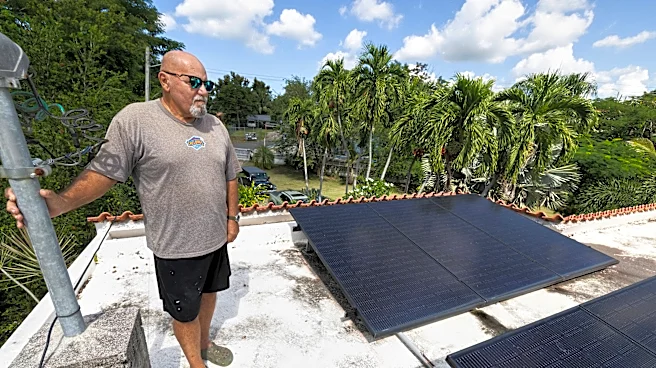
Veridian at County Farm, a net-zero-energy development in Ann Arbor, Michigan, is set to launch Michigan's first residential virtual power plant (VPP) pilot program. In the coming weeks, households within
this fossil-fuel-free community, which generates as much solar energy as it consumes and uses batteries for storage, will have the opportunity to enroll. Detroit-based utility DTE Energy will then remotely control these home batteries, injecting their stored solar power onto the grid during periods of high demand. Joi Harris, president and CEO of DTE Energy, stated that this pilot aims to test a lower-cost approach to meet growing energy needs and enhance grid reliability. The VPP model is designed to smooth out demand peaks, potentially reducing the utility's need for expensive grid infrastructure upgrades and fossil-fuel peaker plants, thereby lowering costs for consumers. Residents like Mitch Hall anticipate being compensated by DTE for participating, with the utility managing the battery optimization automatically.
Why It's Important?
This pilot program at Veridian at County Farm is a significant development for Michigan's energy landscape and the broader U.S. clean energy transition. It represents a tangible step towards integrating distributed energy resources (DERs) like residential solar and battery storage into the main power grid, creating a more resilient and efficient system. For DTE Energy, the VPP offers a way to manage peak demand without investing heavily in new, centralized power plants, which can be costly and environmentally impactful. For consumers, participation could lead to financial incentives and a more stable energy supply. The success of this pilot could serve as a blueprint for other communities and utilities across the nation, accelerating the adoption of VPPs and contributing to national goals for decarbonization and energy independence. It also highlights the evolving role of utilities from sole power providers to orchestrators of a decentralized energy network.
What's Next?
In the coming weeks, Veridian households will begin enrolling in the VPP pilot program. DTE Energy will then commence remotely managing the enrolled home batteries to optimize energy flow to the grid. The utility will monitor the program's effectiveness in meeting energy demands, strengthening reliability, and assessing the financial benefits for both the utility and participating residents. The data and insights gathered from this pilot will be crucial for DTE Energy and other utilities considering similar VPP initiatives. If successful, this pilot could lead to the expansion of VPP programs across Michigan and potentially influence regulatory frameworks and incentives for DER integration nationwide. Lawmakers and energy policymakers will likely observe the results closely to inform future energy policy decisions.
Beyond the Headlines
The Veridian VPP pilot program extends beyond immediate energy benefits, touching upon deeper implications for urban planning, community resilience, and the future of energy consumption. It embodies a shift towards a more symbiotic relationship between individual households and the larger energy grid, where homes are not just consumers but active contributors to energy stability. This model could foster greater energy independence at the community level, reducing reliance on traditional, often fossil-fuel-dependent, power generation. Ethically, it raises questions about data privacy in the context of remote energy management and the equitable distribution of benefits from such programs. Culturally, it promotes a more sustainable lifestyle and encourages residents to actively participate in the clean energy transition. The concept of a 'resilient web of relationships' in energy, as envisioned by Thrive Collaborative founder Matt Grocoff, suggests a paradigm shift towards ecological thinking in infrastructure development, where individual components contribute to the health of the whole system.