







What's Happening?
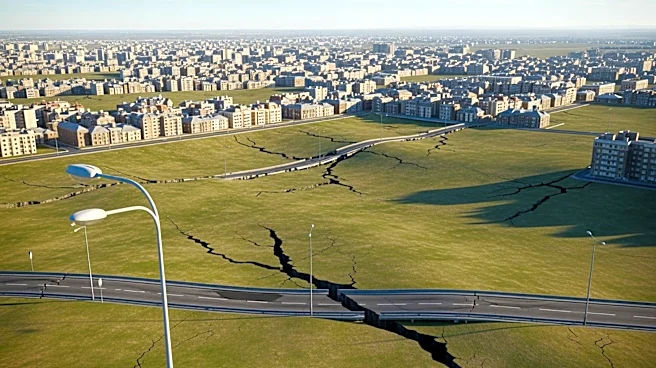
NASA's NISAR satellite has provided new insights into the ongoing subsidence of Mexico City, which is sinking by more than half an inch each month. The satellite, launched in partnership with the Indian Space Research Organisation, uses advanced radar
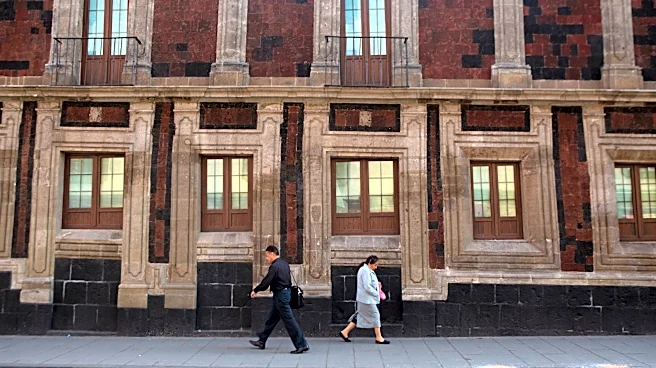
technology to measure ground movement with unprecedented precision. The data, collected between October 2025 and January 2026, highlights areas of significant subsidence, particularly around Benito Juarez International Airport. The city's sinking is attributed to the compaction of the lakebed it was built on, exacerbated by groundwater extraction and urban development.
Why It's Important?
The subsidence of Mexico City is a critical issue affecting millions of residents and the city's infrastructure. The detailed data from NISAR allows for a better understanding of the subsidence patterns, which is essential for planning and mitigating its impacts. The satellite's ability to penetrate cloud cover and vegetation provides a clear picture of the ground movement, which is vital for urban planners and disaster management teams. This information is crucial for addressing the city's water crisis and ensuring the stability of its infrastructure.
What's Next?
The ongoing data collection by NISAR will continue to inform efforts to manage and mitigate the effects of subsidence in Mexico City. The satellite's findings will be used to develop strategies for urban planning and infrastructure maintenance. As more data becomes available, it will help refine models of subsidence and guide policy decisions. The mission's open-access data model ensures that researchers and policymakers worldwide can benefit from the insights provided by NISAR.