



What's Happening?
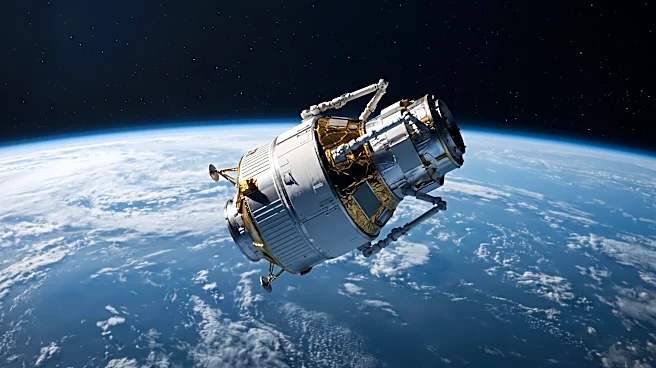
NASA's $30 million mission to extend the life of its Neil Gehrels Swift Observatory has failed. The robotic spacecraft, named LINK and developed by Katalyst Space Technologies, reentered Earth's atmosphere on September 25 after encountering technical
problems. LINK, launched on July 3, was intended to approach Swift, capture it with three robotic arms, and move it into a higher orbit. However, an electrical power system fault disabled two of LINK’s three reaction wheels, which are crucial for orienting the spacecraft. This led to LINK entering a spin that temporarily disrupted communications. Although engineers managed to restore limited control using thrusters and the remaining reaction wheel, the recovery effort consumed too much propellant, making it impossible to safely capture Swift and raise its orbit. NASA and Katalyst announced on August 19 that they would abandon the capture and boost attempt, though in-orbit tests of LINK’s satellite-servicing capabilities continued for 85 days.
Why It's Important?
This mission highlights the significant challenges and high risks associated with in-orbit satellite servicing and space debris mitigation. The failure, despite a substantial investment of $30 million, underscores the complexity of operating robotic spacecraft in the harsh environment of space. While the primary goal of extending Swift's operational life was not achieved, NASA officials stated that the effort still advanced satellite-servicing technology. Katalyst Space Technologies plans to apply the lessons learned from this mission to its next generation of robotic spacecraft, indicating a continued commitment to developing these capabilities. The Swift Observatory, launched in 2004, has already outlasted its planned two-year primary mission by nearly two decades, providing valuable data on gamma-ray bursts and other cosmic events. Its impending reentry due to increased solar activity and atmospheric drag emphasizes the growing need for effective satellite life extension and deorbiting solutions to manage space infrastructure.
What's Next?
The Neil Gehrels Swift Observatory is expected to descend below approximately 185 miles in early to mid-October, at which point operations will become more difficult, and scientific observations are likely to cease. NASA anticipates the observatory will reenter Earth's atmosphere later this year. Despite the failed rescue, Swift resumed data collection in August, with all three science instruments returning to use and the observatory automatically pointing toward new high-energy flashes as of September 25. Katalyst Space Technologies will continue to develop its satellite-servicing technology, incorporating the insights gained from the LINK mission. The broader space industry will likely continue to invest in and refine technologies for in-orbit servicing, refueling, and debris removal, driven by the increasing number of satellites and the economic and scientific value of extending their operational lives.
Beyond the Headlines
The failure of the LINK mission brings to light the intricate balance between technological ambition and the inherent risks of space exploration. While the immediate objective of saving Swift was not met, the mission served as a crucial real-world testbed for advanced robotic capabilities in space. The data and experience gained from LINK's 85 days in orbit, including its approach within 7 to 9 miles of Swift and the testing of its robotic arms, will be invaluable for future endeavors. This incident also subtly underscores the broader issue of space sustainability and the increasing challenge of managing aging satellites and space debris. As Earth's orbit becomes more congested, the development of reliable satellite-servicing technologies is not just about extending missions but also about ensuring the long-term viability of space operations and preventing catastrophic collisions. The ethical implications of investing significant resources in rescuing aging assets versus developing new ones also remain a pertinent discussion.