







What's Happening?
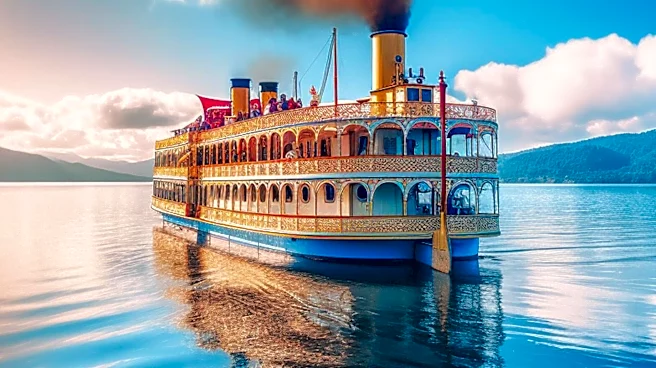
The SS Badger, built in 1953, remains the last large coal-burning steamship in active service in the United States. It operates as a working ferry, not a preserved relic, crossing Lake Michigan between Ludington, Michigan, and Manitowoc, Wisconsin. The vessel
covers a 60-mile route in approximately four hours, transporting cars, trucks, and passengers. The SS Badger is also the final vessel on the Great Lakes powered by Skinner Unaflow engines, which were manufactured in Erie, Pennsylvania. Both the Michigan and Wisconsin historical commissions recognized the SS Badger as a historic site in 1997, making it a listed landmark in two states while still functioning as a vital part of the highway network. The ferry is known for its reliability, rarely missing a sailing due to weather conditions. Its continued operation is attributed to the economic reality that building a bridge across Lake Michigan would be significantly more expensive than maintaining the ferry service.
Why It's Important?
The continued operation of the SS Badger is significant for several reasons. Economically, it represents a cost-effective solution for transportation across Lake Michigan, where the alternative of constructing a bridge would be prohibitively expensive. This highlights a niche where traditional ferry services remain viable due to specific geographical and economic constraints. Environmentally, its status as a coal-burning vessel presents a unique challenge and a point of contention in an era increasingly focused on decarbonization. Its historical designation underscores the importance of preserving working heritage, showcasing a bygone era of maritime engineering and transportation. The SS Badger serves as a living museum, offering a tangible connection to the industrial past of the Great Lakes region. Its role in connecting communities and facilitating commerce between Michigan and Wisconsin demonstrates the enduring utility of certain legacy infrastructure, even as modern alternatives dominate other routes. The vessel's longevity also speaks to the durability of its construction and the dedication of its operators.
What's Next?
The SS Badger is expected to continue its seasonal operations across Lake Michigan, maintaining its role as a functional transportation link and a historical landmark. Its future, however, will likely involve ongoing discussions and potential pressures regarding its environmental impact as a coal-burning vessel. While the immediate economic viability of replacing its engines with a more environmentally friendly alternative might be challenging, the long-term trend towards cleaner energy sources could eventually necessitate such a transition. For now, the focus will remain on its operational efficiency and its continued service to the communities it connects. The historical commissions in Michigan and Wisconsin will likely continue to monitor its status, ensuring its preservation as a working piece of history. Any significant changes to its operation, such as a shift in fuel source or a decision to cease service, would have notable implications for both regional transportation and historical preservation efforts.
Beyond the Headlines
The SS Badger embodies a fascinating intersection of economic pragmatism, historical preservation, and environmental debate. Its continued existence as a coal-burning steamship in the 21st century challenges the conventional wisdom of rapid technological advancement and highlights the enduring power of economic inertia. The fact that it is a listed historic site while simultaneously being a significant emitter of greenhouse gases creates a complex dilemma. This situation prompts deeper questions about how society balances the preservation of industrial heritage with the urgent need for environmental sustainability. The Badger's story is a microcosm of broader national conversations about infrastructure investment, the lifecycle of technology, and the trade-offs inherent in transitioning to a greener economy. It also serves as a reminder that not all transportation solutions are easily replaced by modern alternatives, especially when geographical barriers and cost considerations are paramount. The vessel's unique position forces a re-evaluation of what constitutes 'progress' and how we value both the past and the future in our infrastructure decisions.