


What's Happening?
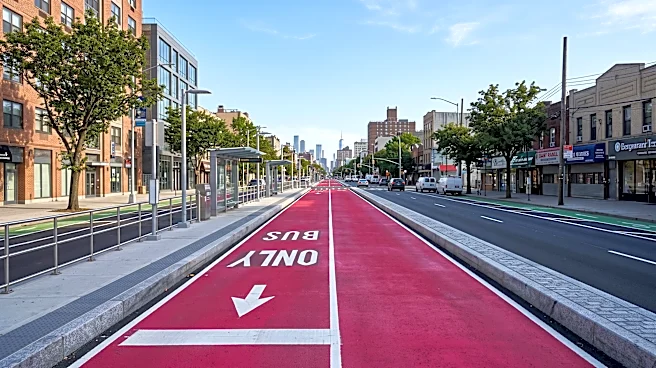
Mayor Zohran Kwame Mamdani and New York City Department of Transportation (NYC DOT) Commissioner Mike Flynn announced the completion of a significant redesign of Flatbush Avenue in Brooklyn. This project aims to deliver faster bus service and enhance
street safety for the 120,000 daily riders along the corridor. The redesign includes 1.9 miles of new, physically protected, center-running bus lanes, six concrete bus boarding islands, and various safety upgrades to improve service and accessibility. Historically, buses on Flatbush Avenue have operated at an average speed of just 4 mph, despite serving major routes like the B41. This initiative is a key component of 'Next Stop: Fast Buses, Better Service,' a partnership between Mayor Mamdani, Governor Kathy Hochul, and the Metropolitan Transportation Authority (MTA) to improve bus service across nearly 75% of the city's bus network.
Why It's Important?
This redesign is crucial for improving urban mobility and quality of life for thousands of New Yorkers, particularly in communities where 69% of households do not own a car. By prioritizing faster and more reliable bus service, the project directly addresses the daily commute challenges faced by residents, making it easier and more affordable to access work, school, and local businesses. The enhanced pedestrian spaces, including new boarding islands and curb extensions, contribute to safer streets for all users. This initiative also lays the groundwork for future bus rapid transit (BRT) service on Flatbush Avenue by 2030, positioning New York City to join other global cities with efficient public transit systems. The project's focus on accessibility and safety underscores a commitment to equitable transportation infrastructure.
What's Next?
The NYC DOT will monitor the project's success in the coming months as New Yorkers adapt to the new traffic patterns and will make any necessary adjustments. This redesign is the initial phase, with plans to deliver world-class bus rapid transit service on Flatbush Avenue by 2030. Future improvements will likely extend to other sections of Flatbush Avenue, as NYC DOT has already begun outreach for the next phase between Grand Army Plaza and Avenue H. The success of this project could serve as a model for implementing similar protected bus lanes and BRT corridors across other boroughs, further expanding the city's commitment to faster, more reliable, and safer public transportation. Continued collaboration between the Mayor's office, Governor's office, and MTA will be essential for these future developments.
Beyond the Headlines
The Flatbush Avenue redesign signifies a broader shift in urban planning priorities towards sustainable and equitable transportation. By dedicating significant infrastructure to bus transit and pedestrian safety, the city is implicitly de-emphasizing reliance on private vehicles, which could lead to reduced traffic congestion and lower carbon emissions in the long term. This project also highlights the importance of public art integration, with signs designed by artist Marc-Olivier Lamothe, adding aesthetic value to public spaces and enhancing the commuter experience. Ethically, it addresses transportation equity by providing efficient service to communities that heavily rely on public transit. The initiative could also influence real estate development along the corridor, potentially increasing property values and attracting new businesses due to improved accessibility and street vitality.