


What's Happening?
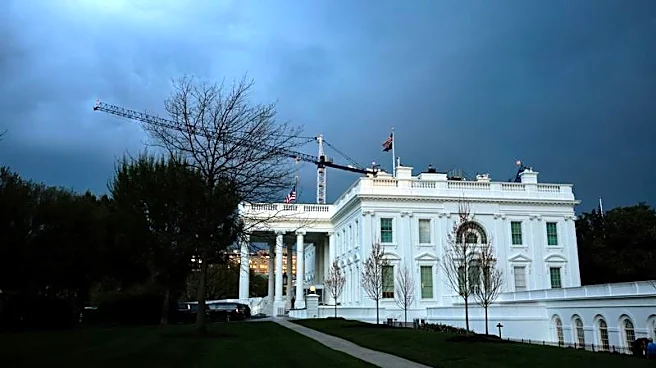
A federal appeals court has directed a lower court to reassess the national security implications of halting the construction of President Trump's $400 million White House ballroom. The U.S. Court of Appeals for the District of Columbia Circuit, comprising
judges Patricia Millett, Neomi Rao, and Bradley Garcia, ruled that there is insufficient information to determine the extent to which the project can be suspended without compromising the safety of the president, his family, or White House staff. The case was returned to U.S. District Judge Richard Leon, who had previously barred the project from proceeding without congressional approval, citing the president's lack of authority to build the ballroom without such approval. The Trump administration argues that the project includes essential security features, such as bomb shelters and military installations, which are critical for protecting against threats like drones and ballistic missiles.
Why It's Important?
The decision to reconsider the lawsuit has significant implications for the balance of power between the executive branch and Congress regarding structural changes to the White House. The case highlights the ongoing debate over presidential authority and the role of congressional oversight in such matters. The construction project, funded by private donations but involving public money for security upgrades, raises questions about transparency and accountability in government spending. The outcome of this legal battle could set a precedent for future administrations regarding the scope of presidential power in making alterations to historic government buildings.
What's Next?
The district court will need to clarify how the injunction affects the administration's plans for safety and security. The Trump administration may seek Supreme Court review, as the appeals court has extended the suspension of the injunction to allow for this possibility. The National Trust for Historic Preservation, which filed the lawsuit, awaits further clarification from the district court and remains committed to preserving the historic significance of the White House. The legal proceedings will continue to unfold, potentially influencing future decisions on presidential authority and historic preservation.