






What's Happening?
Actress Holly Robinson Peete has publicly criticized Health Secretary Robert F. Kennedy Jr. for his 2025 comments regarding autistic children. Speaking at her HollyRod Foundation's November 7 gala in Los Angeles, Peete stated that Kennedy's remarks brought
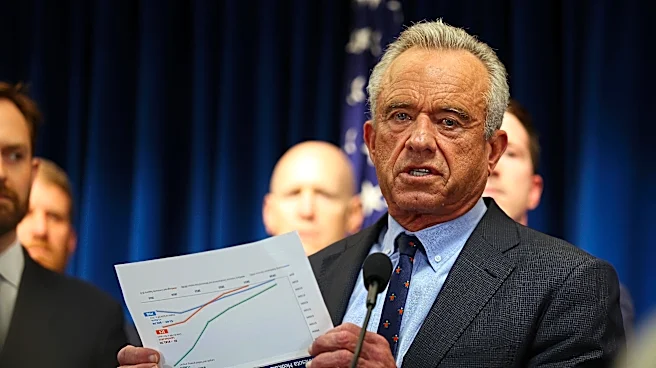
back painful memories of her son RJ's autism diagnosis in 2000. Kennedy, at an April 16, 2025, news conference, asserted that autism 'destroys families' and suggested that many autistic children would never achieve employment, pay taxes, or engage in romantic relationships. Peete, whose son RJ has since achieved independence, including working for the Los Angeles Dodgers and living in his own apartment, expressed dismay that such statements from a health official undermine years of progress in promoting neurodiversity acceptance. She highlighted the challenges Black and brown families face in accessing autism diagnoses and services, an area her foundation, established in 1997, also addresses.
Why It's Important?
Holly Robinson Peete's critique of Health Secretary Kennedy's statements is significant as it highlights the ongoing debate and sensitivities surrounding autism in public discourse, particularly when comments come from high-ranking government officials. Kennedy's remarks, which drew criticism from autistic individuals, their families, and medical experts, are seen as potentially reinforcing outdated and harmful stereotypes about the capabilities and potential of autistic people. Peete's personal testimony, as a mother whose son has defied early pessimistic prognoses, serves to humanize the impact of such broad generalizations. Her advocacy underscores the importance of accurate and empathetic representation of neurodiversity, especially from figures in public health, whose words can influence public perception, policy, and the support systems available to autistic individuals and their families. The incident also brings to light the disparities in access to diagnosis and services for minority communities within the autism spectrum.
What's Next?
The criticism from Holly Robinson Peete may intensify scrutiny on Health Secretary Robert F. Kennedy Jr.'s public statements and policy positions regarding autism and neurodiversity. Advocacy groups and families affected by autism are likely to continue to monitor and respond to any further remarks or policy initiatives from the Health Secretary that they perceive as misinformed or detrimental. This public challenge could prompt Kennedy's office to issue clarifications or engage more directly with the autism community to address concerns. Furthermore, the ongoing dialogue may encourage broader public education campaigns about neurodiversity, emphasizing the spectrum of abilities and needs within the autistic community. Organizations like the HollyRod Foundation will likely continue their efforts to support families and advocate for inclusive policies, potentially gaining more visibility and support as a result of this public discussion.
Beyond the Headlines
This incident transcends a mere disagreement over words, touching upon deeper societal perceptions of disability and the role of public health leadership in shaping those views. Health Secretary Kennedy's comments reflect a perspective that many in the autism community consider to be deficit-focused, overlooking the strengths and unique contributions of autistic individuals. This clash highlights the ethical responsibility of public officials to communicate about health conditions with accuracy, empathy, and an understanding of diverse lived experiences. The controversy also underscores the power of celebrity advocacy in bringing marginalized issues to the forefront, leveraging personal stories to challenge potentially harmful narratives. Long-term, such discussions contribute to the evolving understanding of neurodiversity, pushing for a more inclusive societal framework that values all individuals, regardless of neurological differences, and challenges the medical model of disability in favor of a social model that emphasizes societal barriers rather than individual deficits.