





What's Happening?
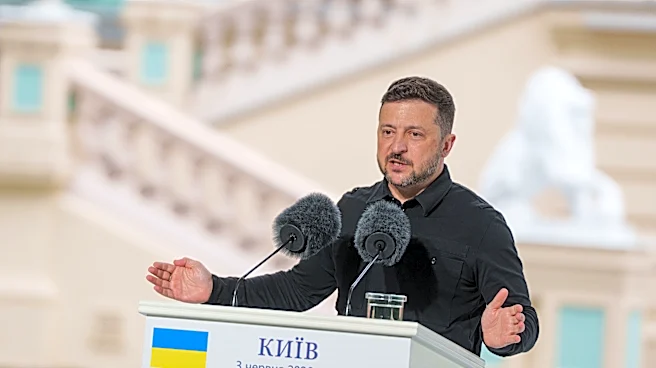
A Russian drone has reportedly targeted a storage facility for spent nuclear fuel near Ukraine's Chornobyl power plant, according to Ukrainian President Volodymyr Zelenskyy. The attack, described as 'extremely vile,' did not result in a spike in radiation
levels. The International Atomic Energy Agency (IAEA) confirmed significant damage to a fuel-reception building, although no spent fuel was present at the time. The incident occurred approximately 15 kilometers from the decommissioned Chornobyl plant, the site of the 1986 nuclear disaster. Despite the damage, radiation levels remain normal, and no injuries were reported. Russia has not commented on the allegations.
Why It's Important?
This incident underscores ongoing tensions and the potential risks associated with military actions near nuclear sites. The attack highlights the vulnerability of nuclear facilities in conflict zones, raising concerns about nuclear safety and environmental security. The lack of immediate radiation threat is reassuring, but the potential for future incidents remains a significant concern. The international community, particularly those involved in nuclear safety and environmental protection, may need to reassess protocols and support measures to prevent similar occurrences.
What's Next?
The international response to this incident could involve increased diplomatic pressure on Russia to avoid targeting nuclear facilities. The IAEA and other global nuclear safety organizations may push for enhanced monitoring and protective measures at vulnerable sites. Ukraine may seek further international support to bolster its defenses against such attacks. The situation could also influence ongoing discussions about nuclear safety and conflict resolution in international forums.