

What's Happening?
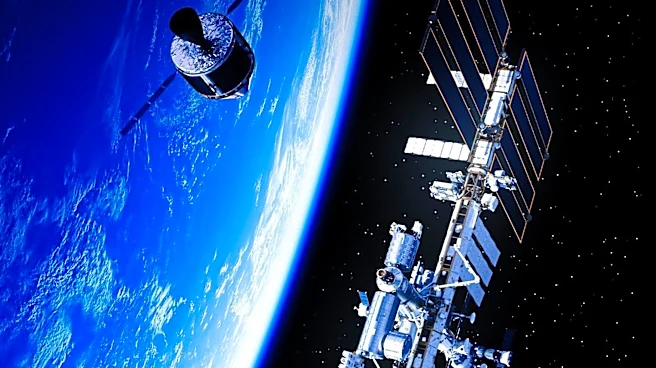
The International Space Station (ISS) is undergoing a joint technical audit by Roscosmos and NASA to assess its readiness for a controlled deorbit procedure expected to conclude around 2030. This audit marks the beginning of the end for the ISS, with
Russia planning to transition some of its modules into a new Russian Orbital Station (ROS). The U.S., however, faces a potential gap in human presence in low Earth orbit due to funding constraints and schedule slippages in developing commercial successor stations. The leading candidates for these stations include Vast's Haven-1, Axiom Space's first module, Starlab Space, and Blue Origin's Orbital Reef, all of which have experienced delays.
Why It's Important?
The decommissioning of the ISS and the potential gap in U.S. human spaceflight presence could have significant implications for the low Earth orbit economy. A gap could negatively impact companies operating in this sector, leading to reduced revenue and potential closures. The transition also highlights the differing approaches of Russia and the U.S. in maintaining human spaceflight capabilities. Russia's plan to use existing ISS modules for its new station ensures continuity, while the U.S. faces uncertainty in its commercial space station development. This situation underscores the challenges of transitioning from government-led to commercial-led space operations.
What's Next?
The audit and subsequent deorbiting of the ISS will require careful coordination between NASA and Roscosmos to ensure a controlled reentry. For the U.S., the focus will be on accelerating the development of commercial space stations to avoid a gap in human spaceflight. This will involve securing additional funding and addressing schedule delays. The success of these efforts will be crucial for maintaining U.S. leadership in space exploration and supporting the growing space economy.
Beyond the Headlines
The transition from the ISS to new space stations could lead to broader geopolitical and economic shifts. As countries and companies invest in space infrastructure, there may be increased competition and collaboration in space exploration. The development of commercial space stations could also drive innovation and create new opportunities in industries such as tourism, research, and manufacturing. However, the challenges of funding and technological development will need to be addressed to realize these potential benefits.