



What's Happening?
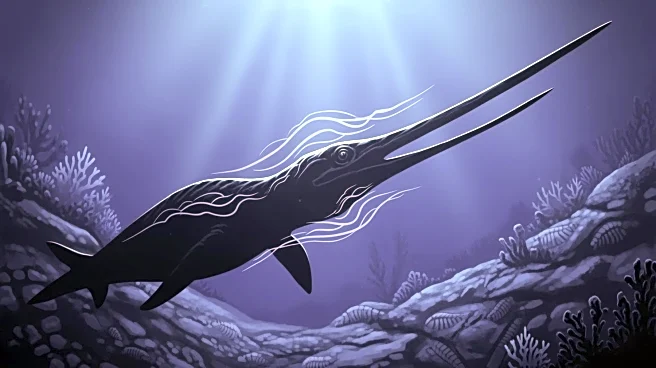
A 190-million-year-old ichthyosaur fossil, named Xiphodracon goldencapensis, has been discovered on the Jurassic Coast of southern England. This well-preserved skeleton, found by local collector Chris Moore in 2001, represents the first new genus of Early
Jurassic ichthyosaur described in over a century. The fossil includes a skull with a large eye socket and a sword-like snout, suggesting it preyed on fish and squid. The discovery, led by Dr. Dean Lomax, provides crucial insights into a period of significant evolutionary turnover in marine reptiles, where several ichthyosaur families went extinct and new ones emerged.
Why It's Important?
The discovery of Xiphodracon goldencapensis is significant as it fills a gap in the understanding of ichthyosaur evolution during the Pliensbachian period, a time when major faunal turnovers occurred. This fossil helps pinpoint when these changes happened, offering a clearer picture of marine life evolution. The find also highlights the Jurassic Coast's ongoing importance in paleontology, continuing the legacy of early fossil hunters like Mary Anning. The specimen's inclusion in the Royal Ontario Museum's collection will allow broader public engagement with this pivotal piece of prehistoric life.
What's Next?
The Xiphodracon fossil will be displayed at the Royal Ontario Museum, providing opportunities for further study and public education. Researchers may continue to analyze the fossil for additional insights into the ichthyosaur's diet and lifestyle, potentially uncovering more about the environmental conditions of the Early Jurassic period. The discovery may also prompt renewed interest in the Jurassic Coast as a site for paleontological research, possibly leading to more significant finds in the future.