






What's Happening?
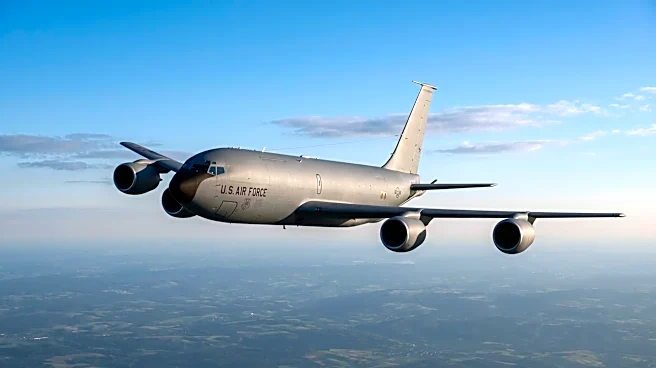
The United States, which once possessed a vast nuclear arsenal peaking at 31,255 warheads in 1967, has significantly reduced its tactical nuclear weapons stockpile. Currently, the U.S. primarily maintains approximately 100 B-61 gravity bombs in Europe,
which can be launched by designated U.S. and NATO partner aircraft. While most U.S. tactical nuclear weapons have been retired and their warheads dismantled, Russian assessments suggest the continued presence of dual-purpose Mk-41 launchers in Europe. These launchers, located at Aegis Ashore sites in Romania and Poland, can be used for SM-3 air defense interceptors or Tomahawk cruise missiles. The U.S. maintains that Tomahawk missiles are conventionally armed, with the nuclear-armed variants having been retired by 1991 to comply with the Intermediate-Range Nuclear Forces (INF) Treaty, from which the U.S. withdrew in 2019. The Pentagon categorizes U.S. nuclear weapons into strategic, delivered by long-range ballistic missiles, and tactical, such as the B-61 gravity bombs. Undersecretary of Defense for Policy Elbridge Colby is leading an effort to update U.S. nuclear policy, focusing on flexible options at the regional level.
Why It's Important?
The shift in the U.S. nuclear posture from a large tactical arsenal to a smaller, deterrence-focused one has significant implications for global security and U.S. foreign policy. The emphasis on deterrence over compellence, particularly against determined adversaries, suggests that nuclear weapons are more effective at preventing actions than forcing them. This approach, however, carries inherent risks of uncontrolled escalation, especially in scenarios involving limited nuclear warfighting. The perceived increase in the U.S. tactical nuclear posture in Europe, as viewed by Russia, could lead to heightened tensions and a potential arms race, particularly with Russia deploying its own nuclear-capable Iskander-M missiles in Belarus. The debate over the dual-purpose Mk-41 launchers highlights a potential ambiguity in U.S. capabilities that could be misinterpreted by adversaries, further complicating de-escalation efforts. The U.S. nuclear policy update, led by Undersecretary Colby, aims to refine flexible options, but the limited remaining tactical arsenal may constrain these options, potentially impacting the U.S.'s ability to respond to regional threats without resorting to strategic weapons.
What's Next?
The ongoing update to U.S. nuclear policy, led by Undersecretary of Defense for Policy Elbridge Colby, will likely shape the future deployment and strategic use of the remaining tactical nuclear weapons. This review will focus on refining flexible options, particularly at the regional level, which could lead to adjustments in how these weapons are integrated into U.S. and NATO defense strategies. The perceived increase in U.S. tactical nuclear posture by Russia, despite U.S. assertions, suggests a continued need for clear communication and transparency to prevent miscalculation. The development of new systems, such as the updated W-80 warhead for the Air Force’s AGM-181 Long-Range Standoff (LRSO) cruise missile, indicates a continued investment in modernizing the U.S. nuclear arsenal. Future discussions will likely revolve around the balance between maintaining a credible deterrent and avoiding actions that could be perceived as escalatory by adversaries, particularly in regions like Europe where tensions are already high.
Beyond the Headlines
The evolution of the U.S. nuclear arsenal reflects a broader shift in strategic thinking, moving away from the massive stockpiles of the Cold War era towards a more nuanced approach focused on deterrence and limited response options. However, this shift introduces complex ethical and strategic dilemmas. The concept of 'limited nuclear warfighting,' while intended to provide flexible options, inherently risks blurring the lines between conventional and nuclear conflict, potentially lowering the threshold for nuclear use. The reputational costs of using nuclear weapons, even against non-nuclear adversaries, are immense, as such actions would likely invite international condemnation and alienate allies. This underscores the ethical imperative for the U.S. to maintain a strong conventional military to address conflicts where nuclear use would be disproportionate. The ongoing modernization of nuclear weapons, such as the 'dial a yield' capability of the W-80 warhead, highlights the technological advancements aimed at making nuclear weapons more 'usable,' which could paradoxically increase the risk of their deployment. The long-term implications involve a continuous re-evaluation of deterrence strategies in a multipolar world, where the proliferation of nuclear technology and the rise of new adversaries necessitate a delicate balance between strength and restraint.