




What's Happening?
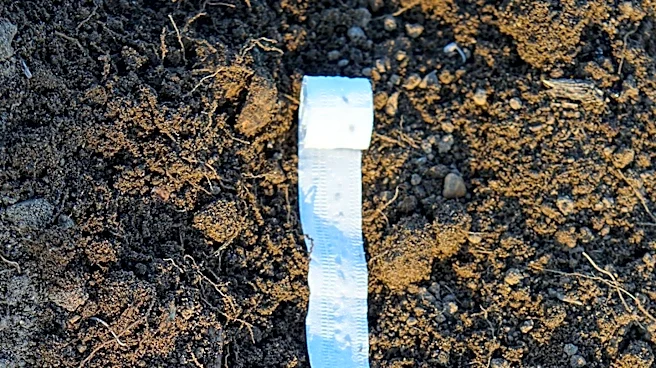
A recent laboratory study conducted by researchers in China and Australia has found that the degradation rate of biodegradable plastic mulch film in farm soil is significantly influenced by the type of clay mineral present and the depth at which the film is buried,
rather than primarily by sunlight exposure. The study, published in the open-access journal New Contaminants, was led by Wei Liu of Hebei University’s College of Chemistry and Materials Science. Researchers tested two common biodegradable materials, PBAT (polybutylene adipate terephthalate) and PLA (polylactic acid). They discovered that PBAT degraded roughly twice as fast as PLA under ultraviolet exposure. Crucially, the presence of clay minerals like kaolinite significantly accelerated degradation, with PBAT losing about 10.7% of its weight under UV light with kaolinite, compared to 4.8% under UV light alone. The most counterintuitive finding was that buried film degraded more than film left on the surface, indicating that soil moisture and mineral chemistry are more dominant factors than sunlight for underground breakdown.
Why It's Important?
This research has significant implications for agricultural practices and environmental policy, particularly as the use of biodegradable mulch film expands globally. The findings challenge the common assumption that these films primarily break down due to sunlight, revealing a more complex interaction with soil components. This means that the effectiveness and environmental impact of biodegradable mulch films can vary widely depending on local soil conditions, such as clay mineral content and moisture levels. For U.S. farmers and policymakers, this study suggests that a 'one-size-fits-all' approach to biodegradable mulch may not be appropriate. It highlights the need for region-specific assessments and potentially tailored product formulations to ensure these films degrade as intended, preventing the accumulation of plastic residues in agricultural lands and mitigating potential ecological toxicity from breakdown products.
What's Next?
The study calls for longer field studies to track chemical migration and ecological risk under real farming conditions, moving beyond laboratory settings. This is crucial for understanding the long-term fate of these materials once they are plowed into diverse soils. Manufacturers of biodegradable mulch films may need to re-evaluate their product claims and potentially develop new formulations optimized for specific soil types and environmental conditions. Regulatory bodies in the U.S. and other countries may also need to consider these findings when setting standards for biodegradable plastics in agriculture, potentially requiring more rigorous testing protocols that account for soil chemistry and burial depth. Further research into the potential ecological toxicity of the degradation products, such as oligomers, carboxylic acids, and alcohols, will also be essential to ensure environmental safety.
Beyond the Headlines
The study uncovers a deeper complexity in the 'biodegradable' label, revealing that the process is far from simple disappearance into the soil. It highlights a broader issue in environmental science: the need for nuanced understanding of material degradation in diverse natural environments. The release of additives like antioxidants and stabilizers during breakdown, and the potential ecological toxicity of some degradation products, raise ethical questions about the full life cycle assessment of 'green' alternatives. This research could spur innovation in material science to develop truly environmentally benign biodegradable plastics that are effective across a wider range of soil conditions and do not leave behind harmful residues. It also underscores the importance of interdisciplinary research, combining chemistry, soil science, and environmental toxicology, to address complex environmental challenges in agriculture.